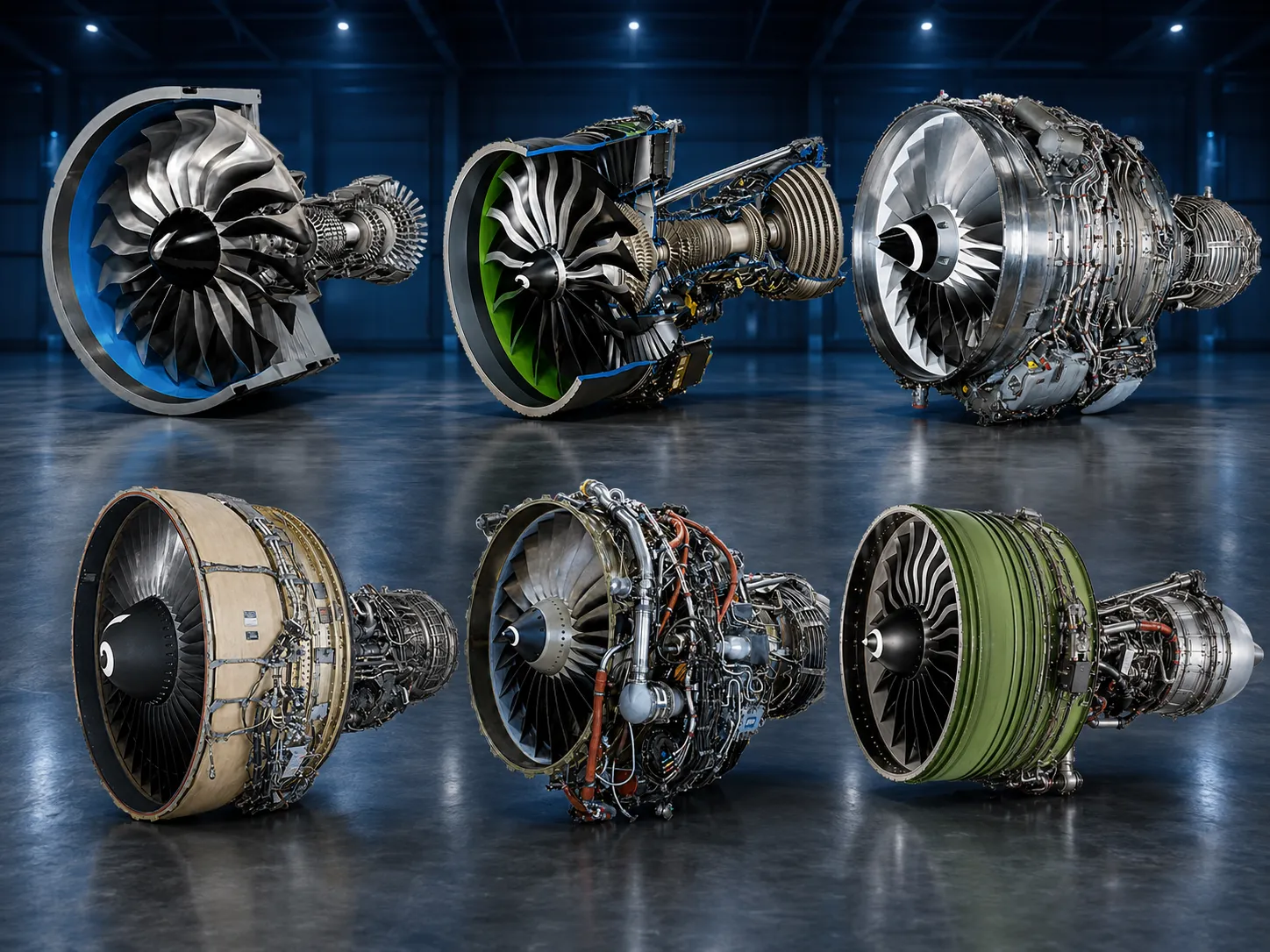
The CF34 family, developed by GE Aerospace, is one of the most widely used turbofan engine families in the regional and midsize business aircraft segment. It became especially important in the market for aircraft with roughly 70 to 100 seats, powering regional jets used heavily in high-frequency commercial operations.
Since entering service, the CF34 family has accumulated more than 200 million flight hours. This milestone reflects its broad operational presence, reliability, and ability to support regional routes where availability, ease of maintenance, and frequent cycles are critical.
The CF34-10E represents an important evolution within the family, offering higher thrust than the CF34-8C and CF34-8E models. Even with this performance increase, it keeps the same overall design philosophy of the CF34 family: proven technology, low technical risk, strong reliability, and controlled operating costs.
The CF34 is a two-spool turbofan engine positioned in the 13,800 to 20,400 lbf thrust range, depending on the version. Its architecture was designed for regional and business aircraft, where the engine must combine performance, reliability, maintainability, and good efficiency on short- and medium-haul routes.
As a turbofan, the CF34 uses a front fan to move air through the engine. Part of that air enters the core, where it is compressed, mixed with fuel, burned, and expanded through the turbines. The remaining airflow passes through the bypass duct, helping generate thrust more efficiently than a pure turbojet configuration.
In simple terms: the CF34 is a turbofan designed for regional jets and business aircraft, known for reliability, ease of maintenance, and strong presence in smaller commercial fleets.
| Parameter | CF34-8C | CF34-8E | CF34-10E |
|---|---|---|---|
| Maximum takeoff thrust | 13,800 lbf | 14,500 lbf | 20,400 lbf |
| Overall pressure ratio | 28:1 | 28.5:1 | 29:1 |
| Length | 10.6 ft, approximately 3.23 m | 10 ft, approximately 3.05 m | 12 ft, approximately 3.66 m |
| Diameter | 4.3 ft, approximately 1.31 m | 4.4 ft, approximately 1.34 m | 4.7 ft, approximately 1.43 m |
| Maximum weight | 2,400 lb, approximately 1,089 kg | 2,600 lb, approximately 1,179 kg | 3,700 lb, approximately 1,678 kg |
| Entry into service | 2001 | 2001 | 2001 |
| Component | Stages | Note |
|---|---|---|
| Compressor section | 14 stages | Single 14-stage compressor responsible for the main airflow compression process. |
| First three compressor stages | 3 stages | Manufactured using blisk technology, where the disk and blades form an integrated structure. |
| High-pressure turbine | 2 stages | Drives the high-pressure compressor. |
| Low-pressure turbine | 4 stages | Drives the fan and low-pressure system. |
The CF34 was developed with a focus on robustness, reliability, and operational simplicity. In regional aviation, engines often complete many takeoff and landing cycles per day, which requires durability, efficient maintenance, and high availability.
| Technology | Description and benefit |
|---|---|
| Blisks in the first three stages | Integration of the blades and disk into a single monolithic component, reducing weight and improving aerodynamic efficiency. |
| Low-risk technology | Architecture based on proven solutions from earlier CF34 family series. |
| Lower emissions | Design optimized to reduce emissions and noise within its category. |
| High reliability | Robust design intended for high-frequency regional operations. |
The CF34-8C was developed for Bombardier regional jets, including aircraft in the CRJ family. This version became an important option for 70- to 100-seat regional aircraft used on short- and medium-haul routes.
The CF34-8E was developed for the Embraer 170 and Embraer 175, two important models in the first-generation E-Jets family. This variant was tailored to the operating requirements of Embraer regional aircraft.
The CF34-10E is the highest-thrust version of the CF34 family. It was developed for the Embraer 190 and Embraer 195, the larger members of the E-Jets family, which require greater propulsive capability.
| Aircraft | Engine version | Note |
|---|---|---|
| Bombardier CRJ700 | CF34-8C | Regional jet with approximately 70 seats. |
| Bombardier CRJ900 | CF34-8C | Regional jet with approximately 90 seats. |
| Bombardier CRJ1000 | CF34-8C | Regional jet with approximately 100 seats. |
| Bombardier Challenger 870/890 | CF34-8C | Business jet application based on the regional platform. |
| Embraer 170 | CF34-8E | Regional jet with approximately 70 to 80 seats. |
| Embraer 175 | CF34-8E | Regional jet with approximately 80 to 90 seats. |
| Embraer 190 | CF34-10E | Regional jet with approximately 90 to 100 seats. |
| Embraer 195 | CF34-10E | Regional jet with approximately 100 to 120 seats. |
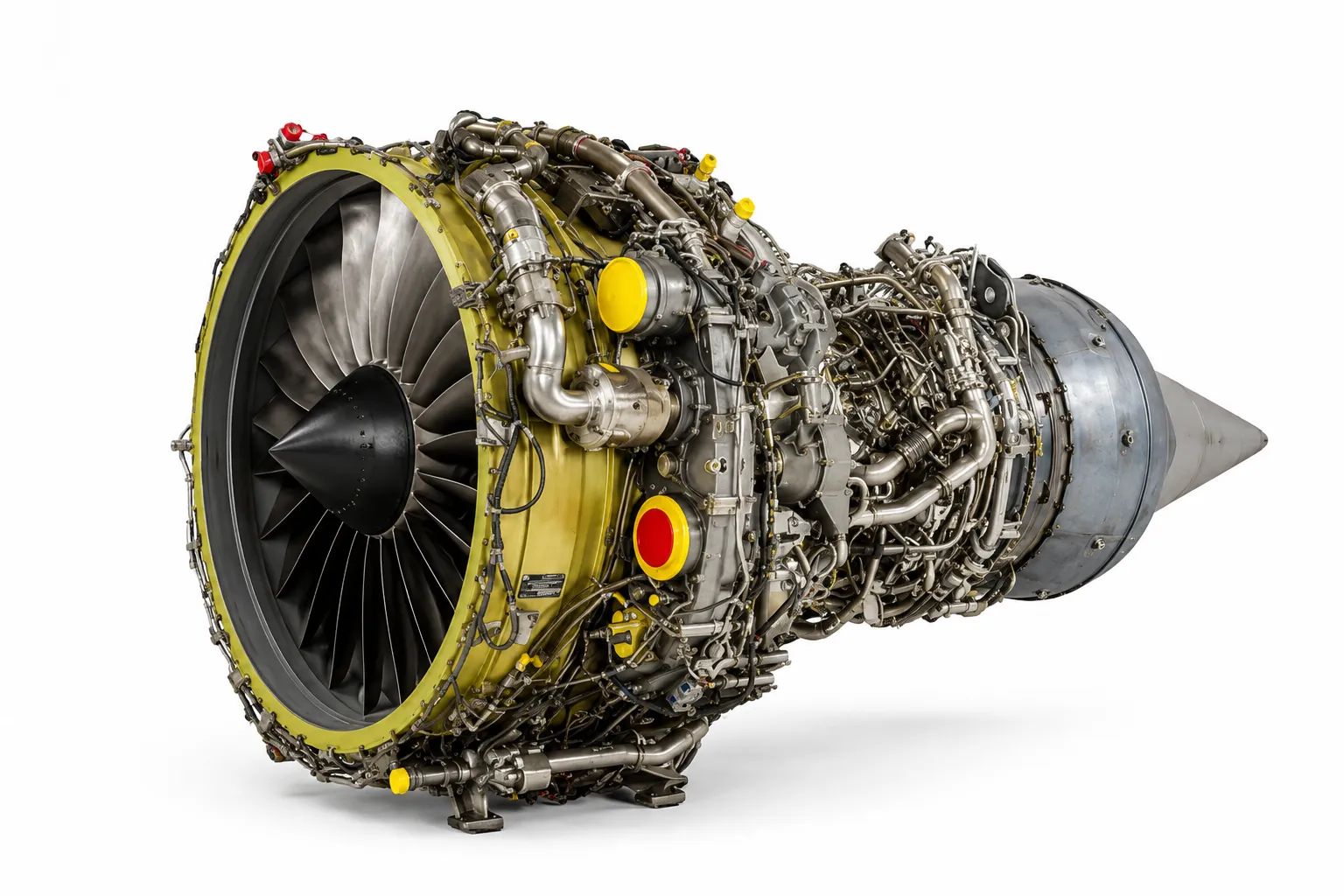
GE Aerospace CF34-8 engine. Image used for educational purposes.
MTU Aero Engines supports the CF34-8C, CF34-8E, and CF34-10E through maintenance, repair, and overhaul activities, commonly known as MRO. MTU Maintenance Berlin-Brandenburg in Germany provides full support for these variants.
| Facility | Location | Start year | Work scope |
|---|---|---|---|
| MTU Maintenance | Berlin-Brandenburg, Germany | 2008 | Full engine MRO. |
| Metric | Value |
|---|---|
| Shop visits through 2025 | More than 1,650. |
| Capability | Full engine overhaul, or engine MRO. |
| Additional services | On-site maintenance activities. |
MTU’s role is focused exclusively on maintenance, repair, and overhaul for the CF34-8 and CF34-10E. For this specific program, the company does not hold development or component manufacturing responsibility.
MTU Maintenance Berlin-Brandenburg offers a comprehensive service portfolio for the CF34-8 and CF34-10E engines. These services are designed to support regional fleet availability, reduce downtime, and provide technical assistance to operators.
| Service | Details |
|---|---|
| Modification, conversion, repair, and overhaul | Complete engine overhaul services. |
| Warranty claim processing | Representation with the original equipment manufacturer, or OEM. |
| Component repair | Advanced repair services for engine components. |
| On-wing and on-site support | Maintenance performed directly on the aircraft or at the customer’s facility. |
| Condition and trend monitoring | Continuous monitoring of engine performance. |
| Engineering technical support | Specialized consulting for troubleshooting and problem resolution. |
| AOG hotline | 24/7/365 hotline for aircraft-on-ground situations. |
| AOG parts delivery | Emergency component supply to reduce aircraft downtime. |
| Replacement engine supply | Rental engines available during maintenance periods. |
| Customized maintenance programs | Plans tailored to each customer’s specific operational needs. |
| Aspect | Details |
|---|---|
| Location | MTU Maintenance Berlin-Brandenburg, Germany. |
| Capability | Full MRO for all CF34-8 and CF34-10E variants. |
| Differentiator | Warranty processing with representation to the original equipment manufacturer. |
The CF34 family has achieved a strong position in regional aviation. Its presence on aircraft such as the Bombardier CRJ and Embraer E-Jets helped establish the engine as a reference solution for 70- to 100-seat operations.
| Metric | Value |
|---|---|
| Position | One of the best-selling engine families in its class worldwide. |
| Segment | Aircraft with approximately 70 to 100 seats. |
| Accumulated flight hours | More than 200 million. |
| Fleet | Thousands of engines in operation. |
| Feature | CF34-8C | CF34-8E | CF34-10E |
|---|---|---|---|
| Thrust | 13,800 lbf | 14,500 lbf | 20,400 lbf |
| Pressure ratio | 28:1 | 28.5:1 | 29:1 |
| Weight | 2,400 lb | 2,600 lb | 3,700 lb |
| Main application | CRJ family | Embraer 170/175 | Embraer 190/195 |
The CF34-8/-10E family entered service in 2001 and has accumulated more than two decades of operation. Its use on regional and business aircraft around the world reinforces the program’s maturity and the confidence operators have placed in the engine family.
| Aspect | Details |
|---|---|
| Entry into service | 2001. |
| Time in operation | More than 20 years of service. |
| Flight hours | More than 200 million. |
| Fleet in operation | Regional and business aircraft worldwide. |
With Embraer E-Jets and Bombardier CRJ fleets expected to remain in service for many years, demand for CF34 MRO services should remain relevant. This positions MTU Maintenance Berlin-Brandenburg as an important support reference for this engine family.
The sustainability outlook for the CF34 family is tied to support for the existing fleet, compatibility with sustainable aviation fuels, commonly known as SAF, and efficient maintenance practices that help extend engine service life.
| Aspect | Details |
|---|---|
| Existing fleet | Expected to remain operational for many years. |
| Gradual replacement | Progressive transition toward new-generation engines, such as the PW1900G. |
| Support | Continued demand for MRO and replacement parts. |
The CF34-8/-10E represents one of the most important engine families in modern regional aviation. Its use on Bombardier CRJ and Embraer E-Jets aircraft helped establish it as a reliable solution for high-frequency operations.
The CF34-8C, CF34-8E, and CF34-10E versions demonstrate the flexibility of the architecture, serving different regional and business aircraft sizes. The CF34-10E, in particular, expanded the family’s capability by offering higher thrust for aircraft such as the Embraer 190 and Embraer 195.
Maintenance support from MTU Maintenance Berlin-Brandenburg reinforces the importance of the MRO ecosystem for regional engines. In fleets that perform many cycles per day, reliability, availability, and fast maintenance turnaround are essential to the operation.