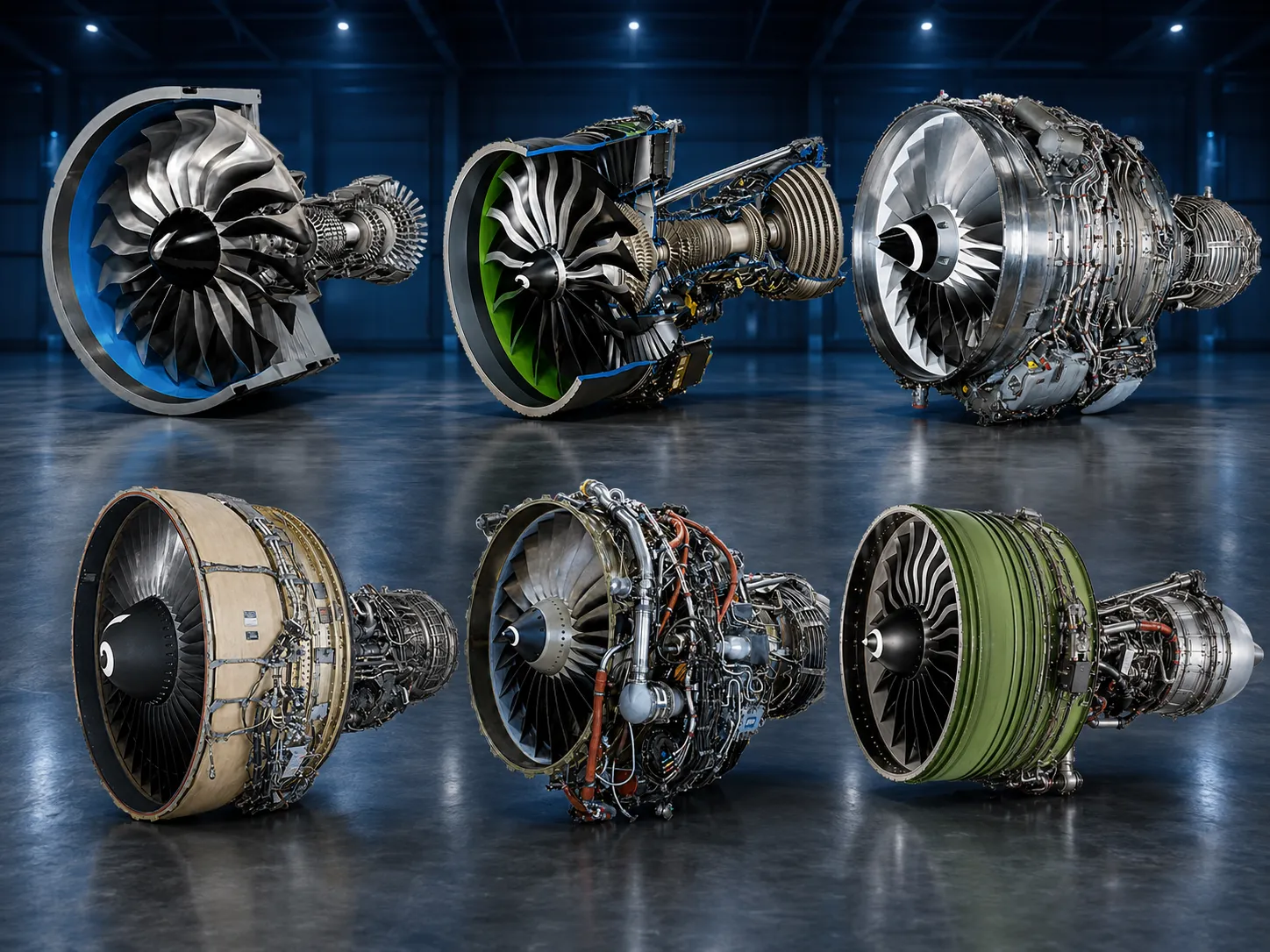
The CFM56 is a family of two-spool turbofan engines developed for commercial aircraft and selected military applications. The family includes several models covering a thrust range from 18,500 to 34,000 lbf.
With more than 30,000 engines delivered and roughly 550 customers worldwide, the CFM56 became one of the most important engines in modern commercial aviation. It has powered aircraft such as the Airbus A320 family, the Boeing 737 Classic, the Boeing 737 Next Generation, and the Airbus A340-200/-300.
CFM56 engines are produced and marketed through a 50/50 partnership between GE Aerospace and Safran Aircraft Engines. This industrial cooperation became one of the most successful engine partnerships in the history of commercial aviation.
The CFM56 is a two-spool turbofan engine positioned in the 18,500 to 34,000 lbf thrust class. This range allowed the engine to serve single-aisle aircraft such as the Airbus A320 and Boeing 737, as well as specific applications on larger aircraft such as the Airbus A340-200/-300.
As a turbofan engine, the CFM56 uses a front fan to move air through and around the engine. Part of the airflow enters the core, where it is compressed, mixed with fuel, burned, and expanded through the turbines. The remaining airflow passes through the bypass duct, helping generate thrust more efficiently.
In simple terms: the CFM56 is a medium-thrust turbofan widely used on commercial single-aisle aircraft. It is known for its reliability, mature design, and large global fleet.
| Parameter | Value |
|---|---|
| Maximum thrust | 34,000 lbf |
| Overall pressure ratio | 25.2:1 |
| Length | 7.5 ft, approximately 2.29 m |
| Diameter | 5.2 ft, approximately 1.58 m |
| Weight | 4,301 lb, approximately 1,951 kg |
| Entry into service | 1982 |
| Component | Stages | Function |
|---|---|---|
| Low-pressure compressor | 4 stages | Performs the first stage of air compression. |
| High-pressure compressor | 9 stages | Completes the compression process before the combustor. |
| High-pressure turbine | 1 stage | Drives the high-pressure compressor. |
| Low-pressure turbine | 2 stages | Drives the fan and the low-pressure compressor. |
The CFM56 uses a mature architecture refined through decades of operation and continuous improvement. Its modular design, digital engine control system, and broad operational experience contributed to its reputation for reliability.
The CFM56-5B is one of the main CFM56 versions developed for Airbus aircraft. It powers the Airbus A320ceo family, including several single-aisle models.
The CFM56-7B was developed for the Boeing 737 Next Generation family. This version became one of the best-known members of the CFM56 family because of the large worldwide 737 NG fleet.
In addition to the CFM56-5B and CFM56-7B, the CFM56 family includes other variants used on different civil and military aircraft.
| Model | Application |
|---|---|
| CFM56-2 | Boeing KC-135, E-3 Sentry AWACS, and Boeing 707. |
| CFM56-3 | Boeing 737 Classic, including the 737-300, 737-400, and 737-500. |
| CFM56-5A | First-generation Airbus A320 applications. |
| CFM56-5C | Airbus A340-200 and A340-300. |
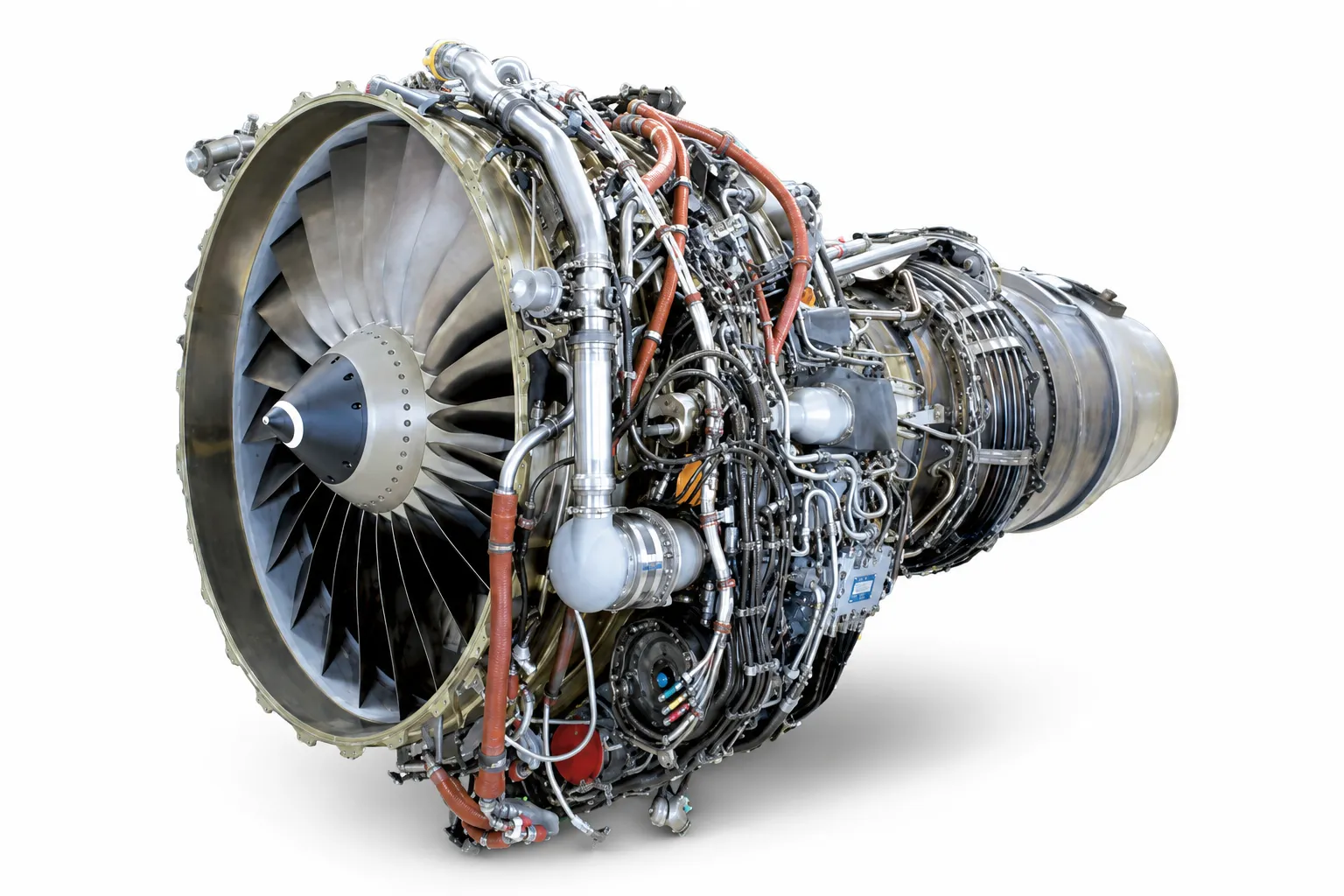
CFM56 engine. Image used for educational purposes.
MTU Aero Engines participates in the CFM56 ecosystem mainly through maintenance, repair, and overhaul services, commonly known as MRO. For the CFM56-5B and CFM56-7B, MTU provides support through specialized facilities in China and Germany.
| Model | Facility | Location | Start year | Work scope |
|---|---|---|---|---|
| CFM56-5B | MTU Maintenance | Zhuhai, China | 2000 | Full engine MRO. |
| CFM56-7B | MTU Maintenance | Berlin-Brandenburg, Germany | 2000 | Full engine MRO. |
| CFM56-7B | MTU Maintenance | Zhuhai, China | 2000 | Full engine MRO. |
| Metric | Value |
|---|---|
| Shop visits through 2025 | More than 3,100, including subtypes. |
| Capability | Complete engine overhaul, or full engine MRO. |
| Additional services | On-site maintenance activities. |
MTU does not have development or component manufacturing responsibility for the CFM56. Its role in this program is focused on maintenance, repair, and overhaul services.
MTU offers a broad service portfolio for CFM56-5B and CFM56-7B engines. These services support fleet availability, reduce downtime, and help operators optimize the engine life cycle.
Repair capabilities include services for complete engines, parts, and individual components, using advanced processes and procedures adapted to different wear conditions.
| Service | Details |
|---|---|
| On-wing and on-site support | Maintenance performed directly on the aircraft or at the customer’s facility. |
| AOG hotline | 24/7/365 direct support line for aircraft-on-ground situations. |
| AOG parts delivery | Emergency component supply to help minimize downtime. |
| Condition and trend monitoring | Continuous tracking of engine performance. |
| Engineering support | Specialized technical consulting for troubleshooting. |
| Teardown services | Engine disassembly for parts recovery and reuse. |
The CFM56 achieved a leading position in the global market for passenger aircraft engines, mainly because of its use on large Airbus and Boeing fleets.
| Metric | Value |
|---|---|
| Engines delivered | More than 30,000. |
| Customers | Approximately 550 worldwide. |
| Market position | Leading engine in passenger aircraft service. |
| Global fleet | Thousands of engines in active operation. |
The CFM56 is gradually being replaced by the LEAP-1A on the Airbus A320neo and the LEAP-1B on the Boeing 737 MAX. Even so, the existing CFM56 fleet remains very large, ensuring continued demand for maintenance, repair, and overhaul services.
The first CFM56 variant entered service in 1982. Since then, the program has accumulated more than 40 years of development, operation, and support across commercial and military platforms.
| Generation | Models | Application |
|---|---|---|
| First generation | CFM56-2 | Early military and commercial aircraft. |
| Second generation | CFM56-3 | Boeing 737 Classic. |
| Third generation | CFM56-5A and CFM56-5B | Airbus A320 family. |
| Fourth generation | CFM56-5C | Airbus A340. |
| Fifth generation | CFM56-7B | Boeing 737 NG. |
The CFM56 is compatible with sustainable aviation fuel, commonly known as SAF, in approved blends. This compatibility can help operators reduce emissions from the existing fleet while following the applicable limits and approvals.
With the LEAP engine family now in service, the CFM56 remains relevant because of its large installed fleet, which will continue operating for many years. This keeps demand strong for spare parts, specialized repairs, and full engine overhaul services.
The gradual aging of the fleet requires increasingly careful and specialized maintenance. At the same time, this creates a robust MRO market for the next decade, especially for companies with established engine maintenance infrastructure.
The CFM56-5B/-7B represents one of the most important engine families in single-aisle commercial aviation. Its use on aircraft such as the Airbus A320ceo and Boeing 737 Next Generation helped establish it as one of the most widely used turbofan engines in the world.
The partnership between GE Aerospace and Safran Aircraft Engines through CFM International became an industrial milestone in aviation. The large installed fleet, technical maturity, and extensive support network ensure that the CFM56 remains relevant even as the newer LEAP generation enters service.
Within the maintenance ecosystem, MTU Aero Engines supports the CFM56-5B and CFM56-7B through MRO services. With specialized facilities and on-site support, the company helps maintain the operational availability of thousands of engines still in service.