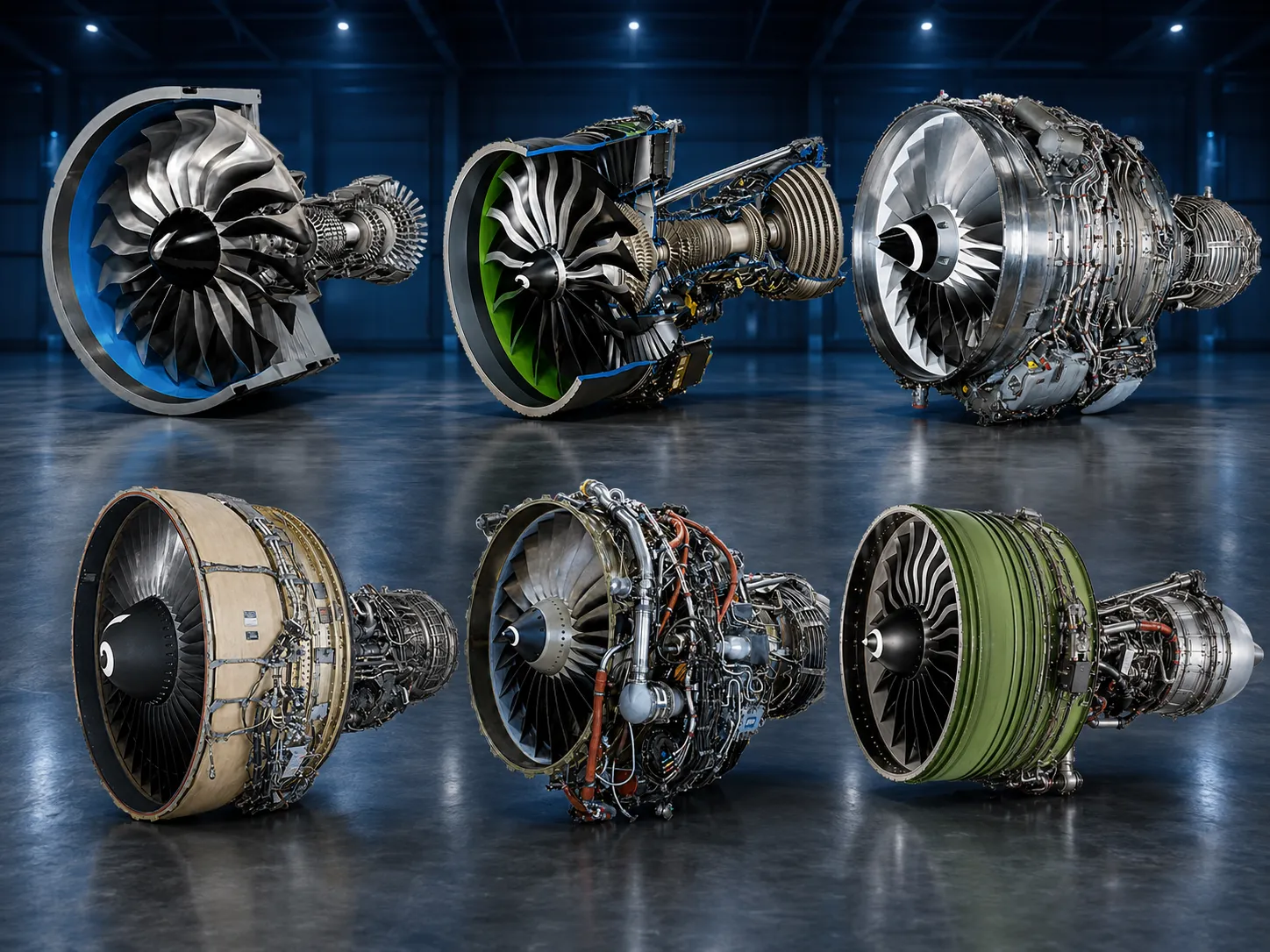
The PW6000, developed by Pratt & Whitney in cooperation with MTU Aero Engines, is a turbofan engine designed for narrowbody aircraft operating on short-haul routes. Its best-known application is the Airbus A318, the smallest member of the Airbus A320 family.
The PW6000 is characterized by high efficiency, a simple design, and a focus on reduced maintenance costs. The engine was developed using modern manufacturing methods, advanced materials, and an architecture aimed at operational robustness.
For MTU, the PW6000 is a historically important program. It was the first time the company took responsibility for developing an engine core component in a commercial application: the six-stage transonic high-pressure compressor. It was also the first time MTU became responsible for final assembly and acceptance testing of production engines.
The PW6000 is a two-spool turbofan engine positioned in the 18,000 to 24,000 lbf thrust range. This places it in the category of engines intended for smaller commercial aircraft within the narrowbody segment.
As a turbofan, the PW6000 uses a front fan to move air through the engine. Part of this airflow enters the core, where it passes through the compressors, combustion chamber, and turbines. The remaining airflow moves through the bypass duct, helping generate thrust more efficiently and with lower noise.
In simple terms: the PW6000 is a turbofan developed for the Airbus A318, with a focus on simplicity, short-haul efficiency, lower maintenance costs, and historical importance in MTU’s technological development.
| Parameter | Value |
|---|---|
| Maximum thrust | 24,000 lbf |
| Bypass ratio | 4.8:1 |
| Overall pressure ratio | 28.2:1 |
| Length | 9 ft, approximately 2.74 m |
| Fan diameter | 4.7 ft, approximately 1.43 m |
| Weight | 5,046 lb, approximately 2,289 kg |
| Entry into service | 2007 |
The PW6000 internal architecture was designed to combine simplicity, performance suited to short-haul operations, and more economical maintenance. The main technical highlight is the six-stage high-pressure compressor developed by MTU, along with the three-stage low-pressure turbine.
| Component | Stages | Note |
|---|---|---|
| Low-pressure compressor | 4 stages | Provides initial airflow compression before the air enters the high-pressure compressor. |
| High-pressure compressor | 6 stages | Provides final compression before the combustion chamber; component developed by MTU. |
| High-pressure turbine | 1 stage | Drives the high-pressure compressor. |
| Low-pressure turbine | 3 stages | Drives the fan and low-pressure compressor; component under MTU responsibility. |
The PW6000 was developed as an efficient and relatively simple engine within its category. This structural simplicity supports maintainability, reduces operational complexity, and contributes to lower costs over the engine life cycle.
| Aspect | Details |
|---|---|
| Efficiency | High efficiency for short-haul operations. |
| Design | Simple, robust design focused on economical maintenance. |
| Materials | Use of modern manufacturing methods and advanced materials for its program era. |
| Maintenance | Significantly reduced maintenance costs within the engine’s intended operating concept. |
The PW6000 was developed to power the Airbus A318, the smallest variant of the Airbus A320 family. The A318 was designed for lower-demand routes, airports with specific operational constraints, and short-haul service.
| Parameter | Details |
|---|---|
| Aircraft | Airbus A318, the smallest member of the A320 family. |
| Segment | Short-haul operations. |
| Capacity | Approximately 107 passengers in a typical configuration. |
| Note | The PW6000 is one of the engine options for the Airbus A318. |
The fleet of Airbus A318 aircraft equipped with PW6000 engines has always been relatively small. Based on airline operational decisions, flight operations with PW6000-powered A318 aircraft have been suspended since mid-2019.
| Aspect | Details |
|---|---|
| Status | Flight operations with PW6000-powered A318 aircraft suspended since mid-2019. |
| Reason | Airline operational decisions. |
| Fleet | Reduced fleet of Airbus A318 aircraft equipped with PW6000 engines. |
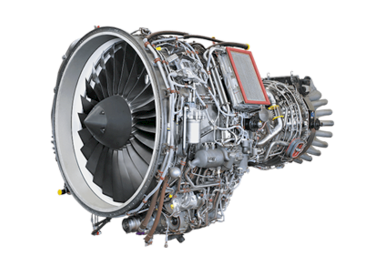
PW6000 engine by Pratt & Whitney. Image used for educational purposes.
MTU Aero Engines has participated in the PW6000 program since 1999 in cooperation with Pratt & Whitney. Its role includes development of the high-pressure compressor, the low-pressure turbine, manufacturing activities, assembly, testing, and maintenance.
| Parameter | Details |
|---|---|
| Partnership start | 1999. |
| Components under responsibility | Six-stage transonic high-pressure compressor and low-pressure turbine. |
| Work scope | Development, manufacturing, assembly, and maintenance. |
The PW6000 is a milestone program for MTU because it significantly expanded the company’s role in commercial engines. In addition to developing an engine core component, MTU also assumed final assembly and acceptance testing responsibilities for production engines.
| Milestone | Details |
|---|---|
| First core component | First time MTU developed an engine core component for a commercial application: the six-stage high-pressure compressor. |
| First final assembly role | First time in MTU history that the company became responsible for final assembly of production engines. |
| First acceptance testing role | First time MTU became responsible for acceptance testing of production engines. |
The high-pressure compressor, or HPC, is one of the most important parts of the engine core. In the PW6000, this component has six transonic stages and was developed by MTU to provide final airflow compression before combustion.
| Aspect | Details |
|---|---|
| Stages | 6 transonic stages. |
| Characteristic | First engine core component developed by MTU for a commercial application. |
| Work scope | Complete development of the high-pressure compressor. |
| Manufacturing | Production of compressor components. |
The low-pressure turbine, or LPT, extracts energy from the exhaust gas flow to drive the fan and low-pressure compressor. In the PW6000, this module has three stages and is also included within MTU’s work scope.
| Aspect | Details |
|---|---|
| Stages | 3 stages. |
| Work scope | Development and manufacturing of low-pressure turbine parts. |
In the PW6000 program, MTU also assumed responsibilities related to final assembly of production engines. This milestone demonstrated the company’s ability to move beyond component development and participate in final integration and acceptance testing.
| Aspect | Details |
|---|---|
| Responsibility | First final assembly role for production engines in MTU history. |
| Work scope | Assembly of the high-pressure compressor and low-pressure turbine. |
| Testing | Acceptance testing for production engines. |
In addition to development, manufacturing, and assembly, MTU also participates in maintenance support for the PW6000. This support is mainly related to the existing fleet and the technical needs associated with the engine life cycle.
| Aspect | Details |
|---|---|
| Responsibility | PW6000 maintenance operations. |
| Work scope | Full MRO, depending on the needs of the existing fleet. |
The PW6000 was developed for a very specific application within the narrowbody aircraft market: the Airbus A318. As a result, its market presence was more limited compared with other engine families designed for higher-volume platforms.
| Segment | Details |
|---|---|
| Narrowbody aircraft | Airbus A318 in short-haul operations. |
| Thrust | 18,000 to 24,000 lbf. |
| Competition | CFM56-5, the alternative engine option for the Airbus A318. |
| Differentiator | Details |
|---|---|
| Simple design | Lower complexity, supporting reliability and maintainability. |
| High efficiency | Optimized design for short-haul operations. |
| Advanced materials | Use of modern manufacturing methods and materials. |
| Low maintenance costs | Architecture focused on reducing maintenance costs. |
The PW6000 program was led by Pratt & Whitney, with significant technical and industrial participation from MTU Aero Engines. The partnership allowed MTU to expand its capabilities in core component development, final assembly, testing, and maintenance.
| Partner | Note |
|---|---|
| Pratt & Whitney | Program leader, responsible for engine development, marketing, and integration. |
| MTU Aero Engines | Responsible for development of the high-pressure compressor and low-pressure turbine, as well as final assembly, testing, and maintenance. |
The PW6000 entered service in 2007 and remained associated with the small Airbus A318 fleet equipped with this engine. Although it did not reach large market scale, the program remains technically relevant because of its role in the development of MTU’s industrial capabilities.
| Aspect | Details |
|---|---|
| Entry into service | 2007. |
| Time in operation | More than 15 years of service up to the suspension of operations with the equipped fleet. |
| Fleet | Small fleet of Airbus A318 aircraft equipped with PW6000 engines. |
The current status of the PW6000 is tied to the reduced fleet of Airbus A318 aircraft equipped with this engine. With operations suspended since mid-2019, operational support demand has become limited, but the program retains historical and technical importance.
| Aspect | Details |
|---|---|
| Operational status | Suspended since mid-2019. |
| Fleet in operation | Very limited. |
| MRO demand | Limited to the existing fleet and residual support needs. |
Despite its limited market presence, the PW6000 was decisive for MTU’s technical evolution. Development of the six-stage high-pressure compressor, final assembly, and acceptance testing created capabilities that would be important in later programs.
| Aspect | Details |
|---|---|
| Importance for MTU | A milestone engine that established new industrial and technical capabilities at the company. |
| Legacy | Six-stage high-pressure compressor, the first core component developed by MTU for a commercial application. |
| Capabilities demonstrated | Final assembly of production engines and acceptance testing. |
The sustainability outlook for the PW6000 is related to technical support for the existing fleet, when needed, and compatibility with sustainable aviation fuels, commonly known as SAF, within applicable limits and approvals.
The PW6000 represents an engine developed for a very specific application: the Airbus A318. Its simple design, reduced maintenance cost concept, and compact architecture reflect the needs of a smaller aircraft within the A320 family.
From an industrial perspective, the program was highly important for MTU Aero Engines. Development of the six-stage transonic high-pressure compressor was the company’s first work on a core component for a commercial engine, marking a major technical step forward.
Although the PW6000-equipped fleet was small and operations have been suspended since mid-2019, the engine remains relevant as a historical milestone in MTU’s industrial evolution and as an example of an architecture designed for a very specific commercial aircraft application.