To explain this system, we will use the Boeing 737 MAX 8, also known as the Boeing 737-8, as our reference. The goal is not to turn this page into a technical aircraft manual, but to use this model as a practical example so the reader can get a realistic understanding of how the communication system works in a modern commercial aircraft. Some details may vary depending on the aircraft configuration, the airline, the installed equipment, the operating region, and the applicable technical documentation.
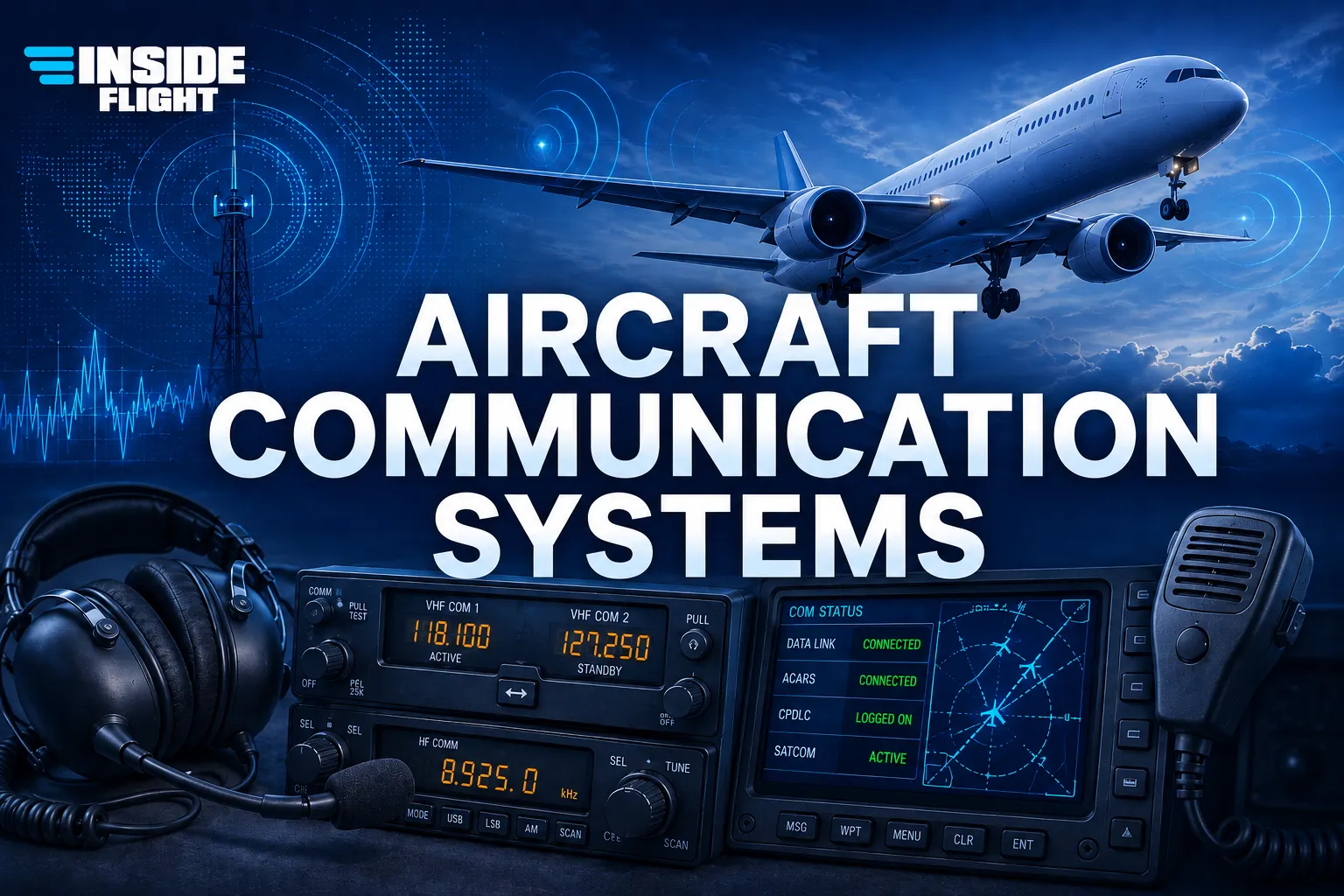
The communication system allows the aircraft to exchange information with air traffic control, other aircraft, the airline, ground stations, and, in some configurations, satellite communication systems. It is not limited to pilots speaking over the radio. In modern commercial aircraft, communication includes voice, digital data, selective calling, operational messages, internal communication, and integration with onboard systems.
In an aircraft such as the Boeing 737 MAX 8, the communication system is part of the avionics systems group. It uses radios, antennas, audio control panels, communication management units, microphones, speakers, headsets, and cockpit interfaces. These resources work together to provide clear, reliable, and appropriate communication during operation.
Communication is one of the foundations of operational safety. During a flight, pilots need to receive clearances, climb and descent instructions, route changes, weather information, traffic information, and approach and landing guidance. Without proper communication, the aircraft may become operationally limited or need to follow specific lost-communication procedures.
In commercial operations, communication is also important for coordination with the airline. Messages about schedules, maintenance, gates, fuel, alternate airports, operational planning, and aircraft condition can be transmitted through data systems, reducing the need to rely only on voice communication.
VHF, or Very High Frequency, is the main form of voice communication in short- and medium-range commercial operations. It is the radio pilots normally use to speak with the control tower, ground control, approach control, en route control centers, and other air traffic control frequencies.
In simple terms, VHF works as a line-of-sight aviation radio. This means that quality and range depend heavily on the aircraft’s altitude, distance from the transmitting station, terrain, and ground antenna coverage. In flight, because the aircraft is at a high altitude, the range is usually much greater than it is on the ground.
In a modern Boeing 737, the aircraft normally has more than one VHF radio. This allows the flight crew to maintain the main communication, monitor another frequency, or use dedicated channels for operational communication and data.
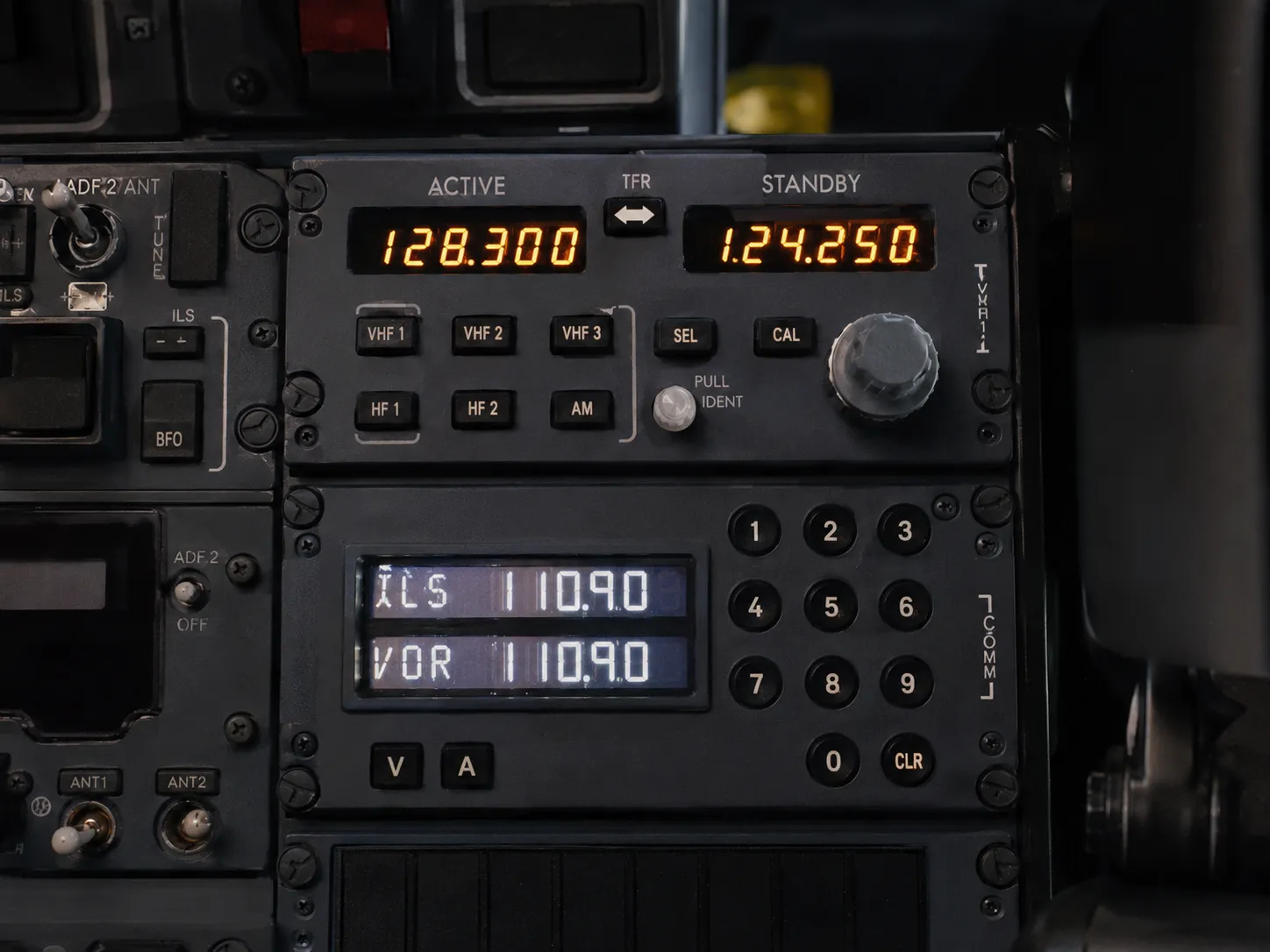
VHF radio panel in the cockpit, used to select frequencies and perform voice communication with air traffic control.
HF, or High Frequency, communication is mainly used in areas where VHF coverage is not sufficient, such as oceanic routes, remote regions, or areas with limited ground communication infrastructure. Unlike VHF, HF can reach much longer distances because its signals can propagate through the ionosphere.
On the other hand, HF usually has lower audio quality and may be affected by atmospheric interference. For that reason, in many situations, it is used as a backup or alternative when direct VHF communication is not available. In long-range operations or flights over remote areas, HF can be an important part of the aircraft’s communication capability.
In some configurations, commercial aircraft can use SATCOM, or satellite communication, to transmit voice and data in areas where VHF and HF are not sufficient or are not ideal. SATCOM systems allow long-distance communication and may be used for safety services, operational communication, and aircraft data.
In the context of the Boeing 737 MAX 8, the presence and type of SATCOM depend on the configuration selected by the airline. Not every aircraft will have exactly the same communication equipment installed.

Communication antennas installed on the fuselage of a commercial aircraft, used to transmit and receive voice and data signals.
In addition to voice communication, commercial aircraft also use digital communication. One of the best-known systems is ACARS, which stands for Aircraft Communications Addressing and Reporting System. It allows short messages to be sent and received between the aircraft and ground stations.
In practice, ACARS can be used for operational messages, flight data, maintenance information, airline updates, weather requests, and other types of communication between the aircraft and the ground. For passengers, this is invisible. For the operation, however, it is an important tool for coordination and efficiency.
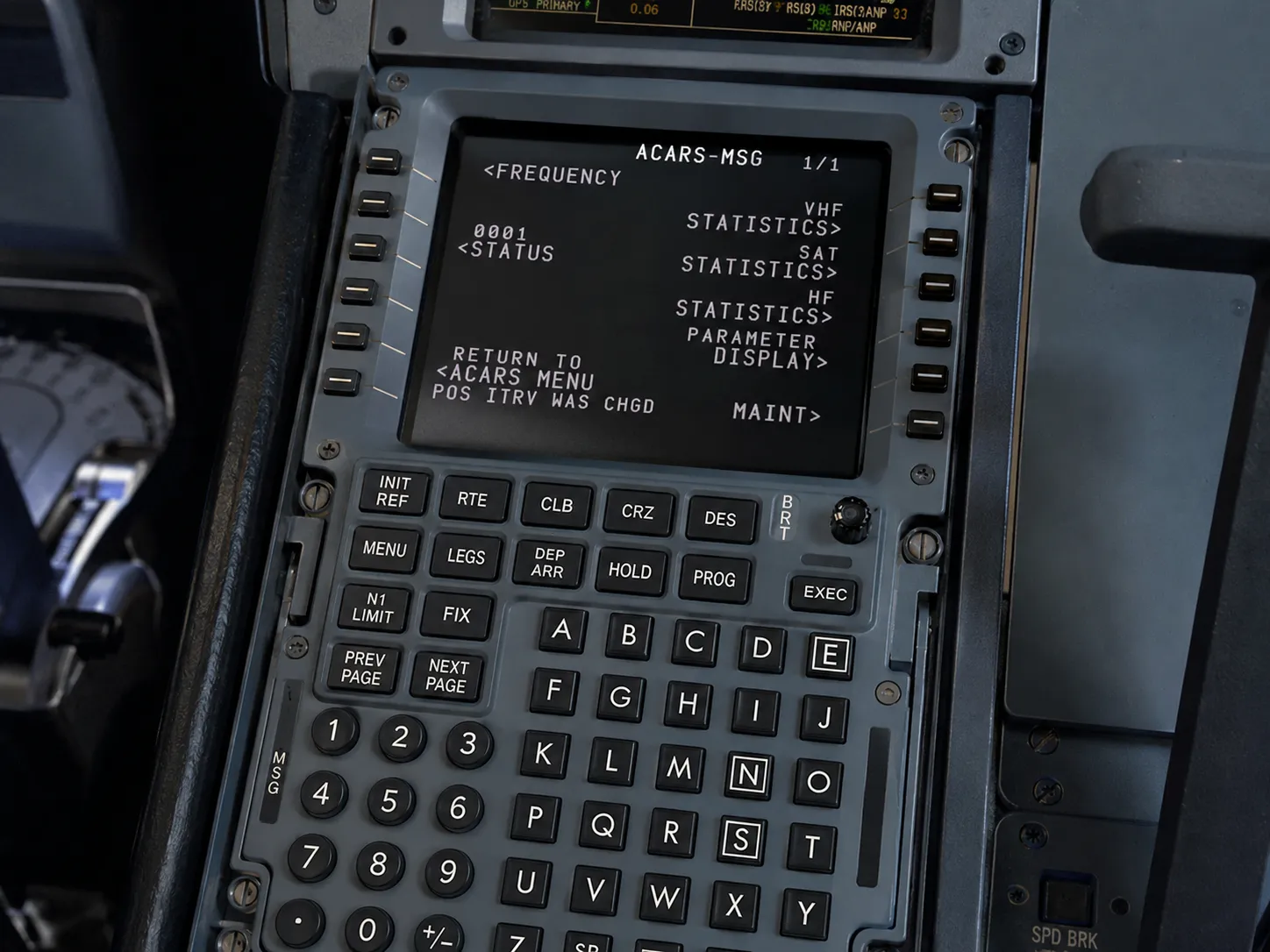
ACARS/CDU interface in the cockpit, used to exchange digital messages between the aircraft and ground stations.
In modern aircraft, data communication can be organized through a communication management unit. Equipment such as the Communications Management Unit — CMU helps route messages between onboard systems and ground systems.
In simple terms, while the VHF radio allows pilots to communicate by voice, the communication management unit helps the aircraft send and receive digital messages in an organized way. It works like a central routing unit for the aircraft’s digital messages.
The CMU is normally installed in the aircraft’s electronic or avionics compartment, in technical racks located below the cockpit. It is not a panel visible to the flight crew; it is an electronic unit mainly accessed by maintenance teams. Its function is to process, manage, and route digital messages between aircraft systems, the flight crew, the airline, and ground communication networks.
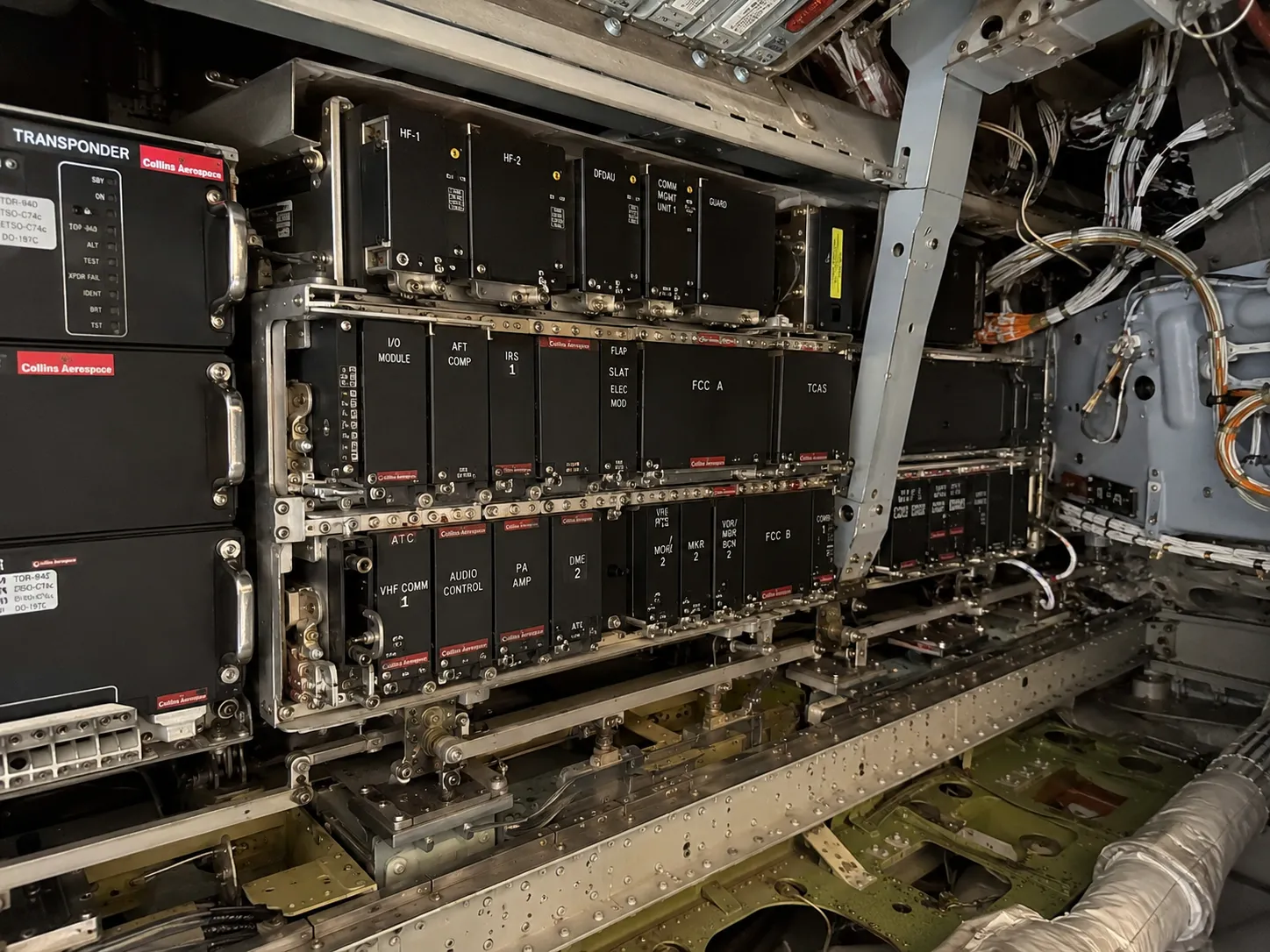
CMU installed in an electronic rack inside the avionics compartment, responsible for managing and routing the aircraft’s digital messages.
Another important feature in commercial aircraft is SELCAL, or Selective Calling. It allows a ground station to call a specific aircraft using an audio code. This is especially useful in HF communication, where keeping the audio constantly turned up can be tiring because of noise and interference.
Instead of having the crew listen continuously to a noisy frequency, SELCAL alerts the pilots when there is a call specifically directed to their aircraft. This reduces auditory workload and improves communication management on longer flights.
To manage all these communication methods, the cockpit has audio control panels. These panels allow pilots to select which radio will be used for transmission, which frequencies will be monitored, and how audio will be heard through headsets or speakers.
In a normal situation, one pilot may be transmitting on the main VHF frequency while the other monitors another frequency. The crew may also monitor cabin communication, interphone, emergency radio, or operational messages. The audio system organizes these sources so the crew can listen and speak through the correct channels.
Antennas are essential components of the system. They transmit and receive radio or data signals. Depending on the type of communication, the aircraft may have VHF, HF, SATCOM, and other antennas, each with a specific function.
In communication systems, antennas allow signals to leave the aircraft and reach ground stations, satellites, or other aircraft. The location and type of antenna depend on its function, the frequency being used, and the aircraft design.
The communication system also includes internal communication. Pilots need to communicate with each other, with the cabin crew, and, on the ground, with maintenance or ground teams. To do this, the aircraft uses interphone systems, internal calls, speakers, microphones, and, in some cases, external connections for communication with mechanics during ramp operations.
This type of communication is very important during ground procedures, pushback, engine start, coordination with flight attendants, and communication with maintenance. Although it may seem simple, internal communication is part of safe and coordinated aircraft operation.
Another related element is the PA system — Passenger Address — used for announcements to passengers. It allows pilots and flight attendants to transmit messages in the cabin. This system is not used for communication with air traffic control, but it is part of the aircraft’s overall communication system.
Through this system, the crew can provide information about boarding, takeoff, turbulence, safety procedures, landing, and other instructions. In a commercial aircraft, passenger communication is also an important part of safety and the onboard experience.
During flight, pilots change frequencies as they move from one control area to another. For example, the aircraft may start by talking to ground control, then tower, departure control, en route control center, approach control, and finally tower again at the destination.
Each sector change usually involves a frequency change. Pilots tune the radio, confirm the frequency, make contact, and follow the instructions received. At the same time, they may receive digital messages through ACARS or maintain operational communication with the airline.
In abnormal situations, the communication system becomes even more important. The crew may need to declare an emergency, request priority, coordinate a diversion, report failures, request weather information, or receive special instructions from air traffic control.
If communication fails, specific procedures exist. The aircraft may use another radio, another frequency, data communication, a transponder with the appropriate code, or follow lost-communication procedures required by flight rules. This shows why the system needs redundancy and alternatives.
Aircraft communication is designed with redundancy. This means the aircraft does not depend on only one means of communication. Depending on its configuration, it may have more than one VHF radio, possibly HF, data communication, SATCOM, interphone, and other resources.
Operational requirements for communication systems show that not every item has the same operational impact, but the condition of the equipment must be evaluated according to rules, type of flight, and regulatory requirements.
It is important not to confuse communication with navigation. The communication system is used to exchange information by voice or data. The navigation system helps determine the aircraft’s position, route, direction, and flight path.
Even so, the two systems work closely together. For example, pilots may receive a clearance from air traffic control by radio and then enter a route into the FMS. They may also receive digital messages that support flight planning. Communication and navigation are different systems, but they complement each other during operation.
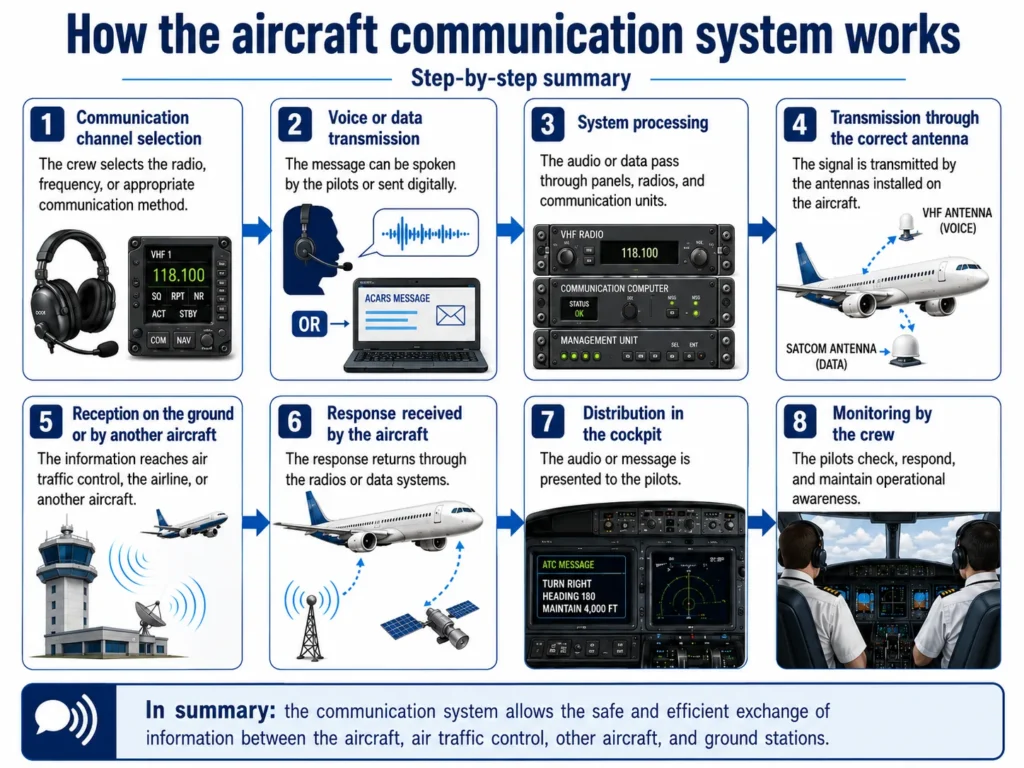
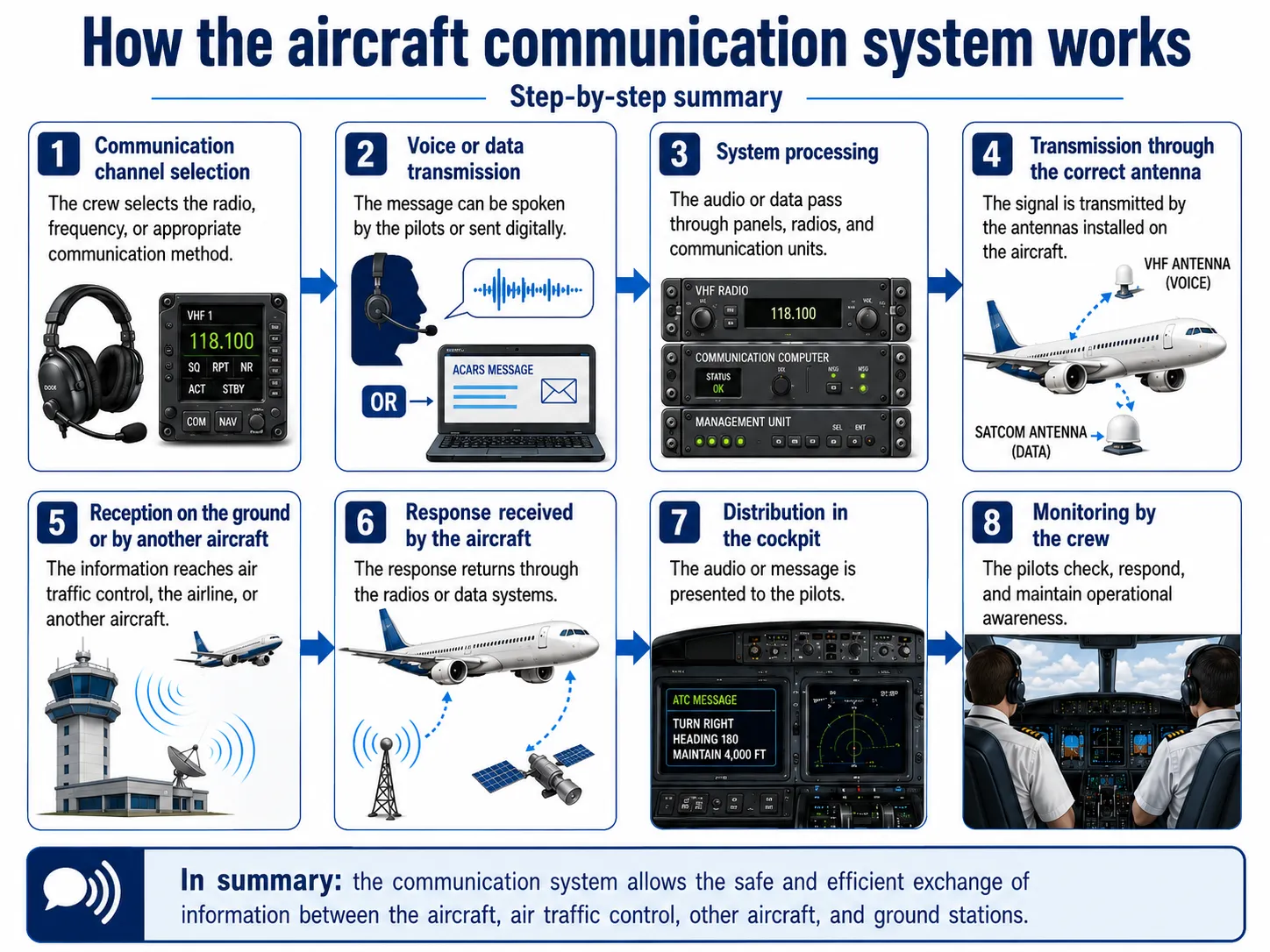
When a pilot presses the transmit button on the yoke or microphone, the captured audio is sent to the audio control panel, passes through the selected radio, is transmitted through the appropriate antenna, and reaches the station listening on that frequency. When a response comes back, the process happens in reverse: the antenna receives the signal, the radio processes it, the audio panel routes it, and the sound reaches the headset or speaker.
With digital messages, the logic is similar, but instead of voice, the system handles data. The message is generated by an onboard system or entered by the crew, passes through a management unit, is sent by VHF, SATCOM, or another available medium, and reaches the intended recipient on the ground.
The communication system is essential because it keeps the aircraft connected to the operational environment. It allows pilots to receive instructions, coordinate route changes, report abnormal situations, exchange data with the airline, and maintain internal communication with the crew.
To passengers, communication may seem like nothing more than “the pilot talking on the radio.” In reality, it is a network of systems involving voice, data, antennas, radios, panels, digital messages, interphone, selective calling, and integration with other aircraft systems.
In summary: in a commercial aircraft such as the Boeing 737 MAX 8, the communication system allows voice and data exchange between the aircraft, air traffic control, the airline, other aircraft, and ground-based systems. It combines radios, antennas, audio panels, digital communication, interphone, and monitoring resources to keep the operation coordinated, safe, and efficient.
Note: this content is educational and introductory. It does not replace official manuals, Boeing technical documentation, FAA publications, certified training, airline procedures, or guidance from qualified professionals.