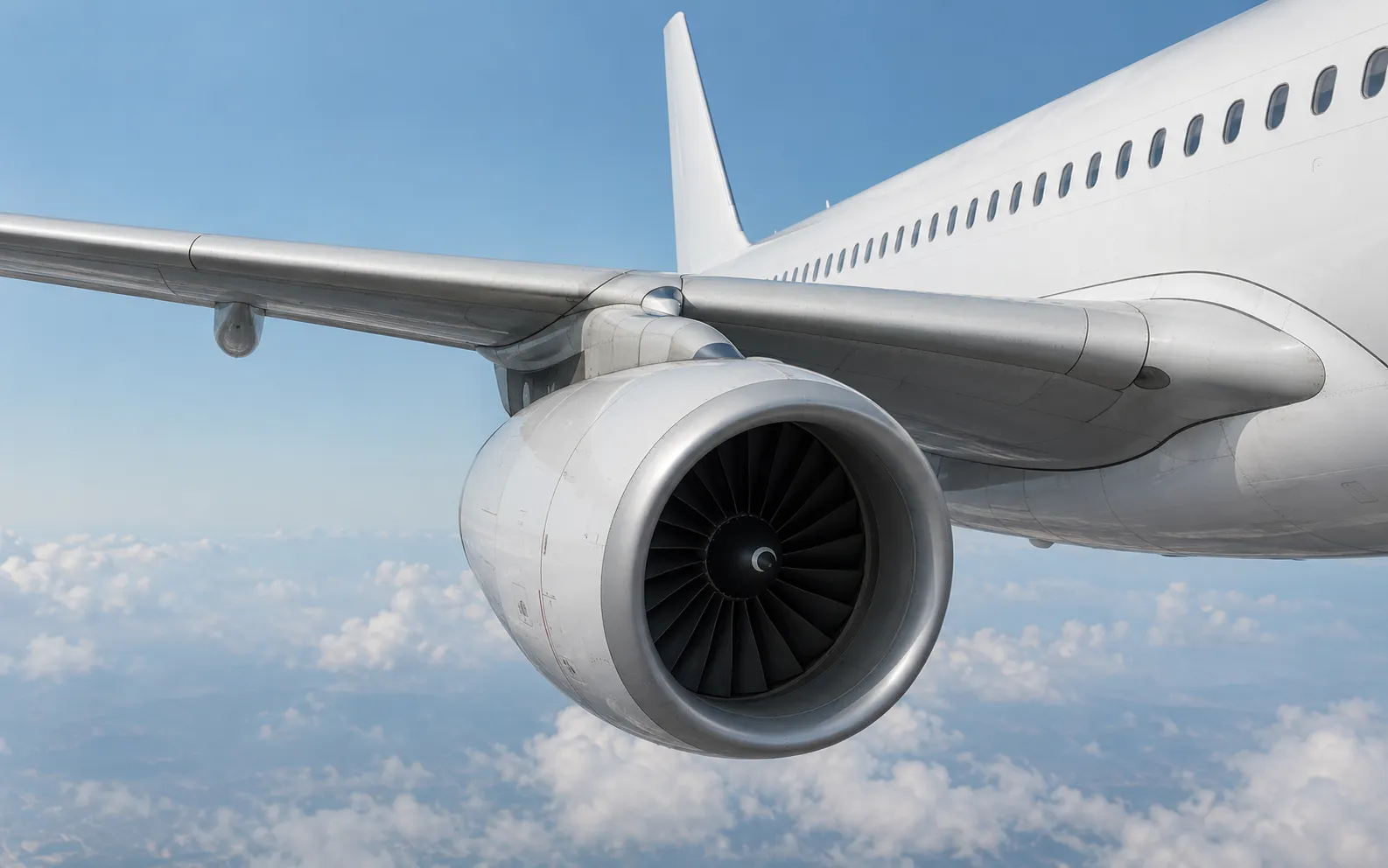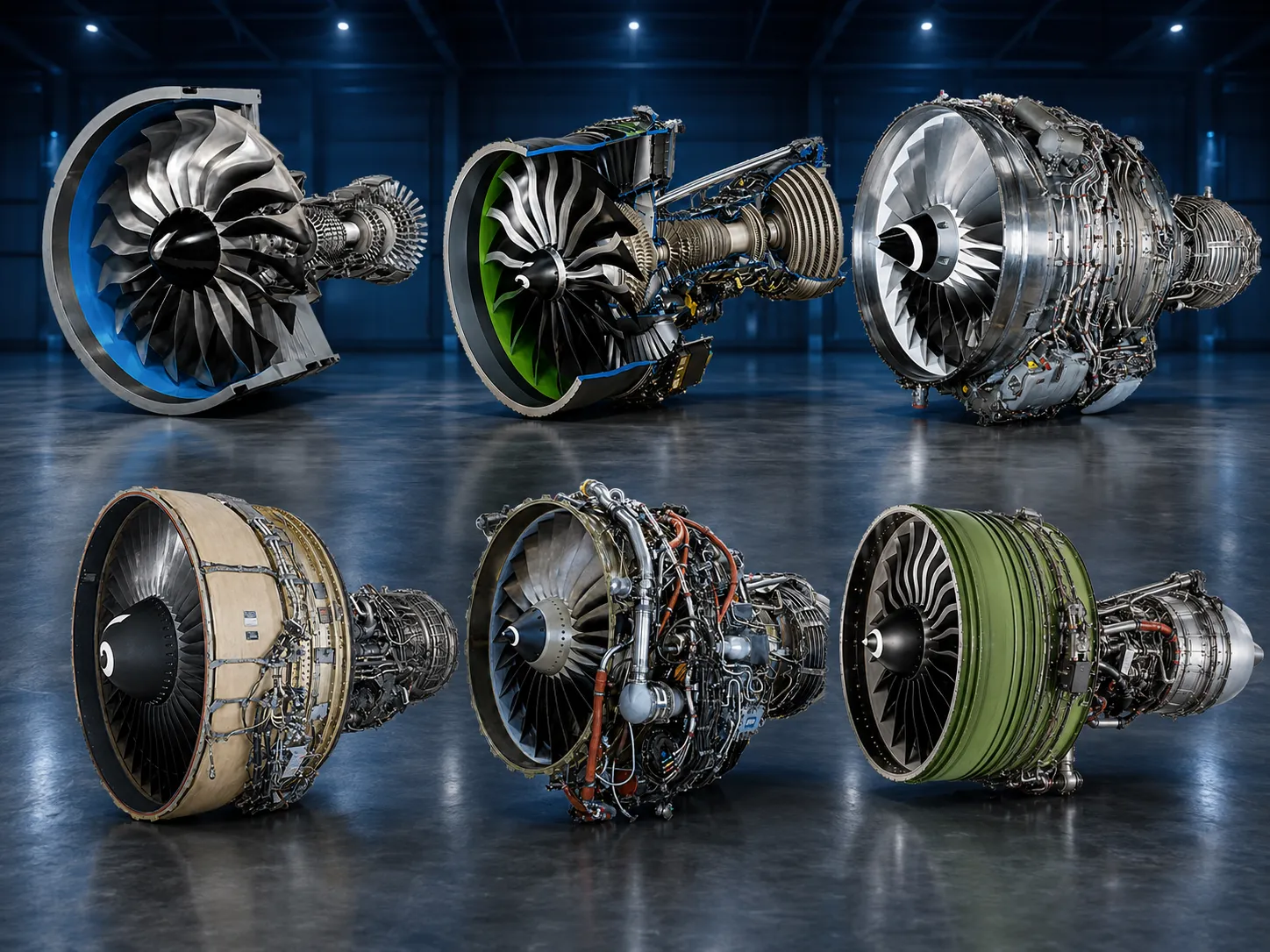
The GP7000 is a turbofan engine developed, produced, and distributed by Engine Alliance, a joint venture formed by GE Aerospace and Pratt & Whitney. It was created for the long-haul market and became best known for powering the Airbus A380, the largest passenger aircraft ever produced in series.
The program combines technologies from two highly important widebody engine families in commercial aviation: the GE90 and the PW4000. The goal was to bring together proven operational solutions with modern design techniques, advanced materials, and an architecture capable of meeting the demands of a very large four-engine aircraft.
Its main characteristics include low fuel consumption for its category, optimized weight, reduced noise, and reliability supported by mature technologies. For this reason, the GP7000 became one of the two engine options available for the Airbus A380, alongside the Rolls-Royce Trent 900.
The GP7000 is a two-spool turbofan engine positioned in the approximate 70,000 to 81,500 lbf thrust range. This places it among the large commercial engines designed for very high-capacity widebody aircraft.
As a high-bypass turbofan, the GP7000 uses a large front fan to move a high volume of air. Part of this airflow enters the engine core, where it goes through compression, combustion, and expansion through the turbines. The remaining airflow moves through the bypass duct, contributing to most of the thrust with greater efficiency and lower noise.
In simple terms: the GP7000 is a large turbofan developed for the Airbus A380, combining GE90 and PW4000 technologies to deliver high thrust, strong efficiency, reliability, and lower noise in long-haul operations.
| Parameter | Value |
|---|---|
| Maximum thrust | 81,500 lbf |
| Bypass ratio | 9:1 |
| Overall pressure ratio | 43.9:1 |
| Length | 15.4 ft, approximately 4.69 m |
| Fan diameter | 9.5 ft, approximately 2.90 m |
| Weight | 13,400 lb, approximately 6,078 kg |
| Entry into service | 2008 |
The GP7000 internal architecture was developed to combine high compression capability, strong cruise efficiency, and operational robustness. Its compressor and turbine sections reflect the technical experience inherited from the GE90 and PW4000 families.
| Component | Stages | Note |
|---|---|---|
| Low-pressure compressor | 5 stages | Performs the initial compression of the airflow before it enters the high-pressure core. |
| High-pressure compressor | 9 stages | Provides final compression before the combustion chamber. |
| High-pressure turbine | 2 stages | Drives the high-pressure compressor. |
| Low-pressure turbine | 6 stages | Drives the fan and the low-pressure compressor. |
The GP7000 was created by combining the technical strengths of GE Aerospace and Pratt & Whitney. Engine Alliance used technologies already proven in widebody engines to create a propulsion solution specifically designed for the Airbus A380.
| Origin | Technology incorporated |
|---|---|
| GE90 | Proven high-pressure compressor and high-pressure turbine architecture. |
| PW4000 | Proven low-pressure compressor and low-pressure turbine architecture. |
| Both families | Advanced materials, modern design techniques, and efficiency-focused solutions. |
| Aspect | Details |
|---|---|
| Fuel efficiency | High cruise efficiency for long-haul operations. |
| Weight | Optimized weight for its thrust class. |
| Noise | Reduced noise emissions compared with earlier-generation designs. |
| Reliability | Based on technologies already proven in widebody engine families. |
The GP7000 was developed to power the Airbus A380, a four-engine aircraft designed to carry a very large number of passengers on long-haul routes. Because the A380 uses four engines per aircraft, it required a propulsion solution with high thrust, efficiency, and reliability.
| Parameter | Details |
|---|---|
| Aircraft | Airbus A380, the world’s largest passenger aircraft. |
| Segment | Long-haul operations. |
| Configuration | Four-engine aircraft, with four engines installed per airplane. |
| Note | The GP7000 is one of the two engine options for the A380, alongside the Rolls-Royce Trent 900. |
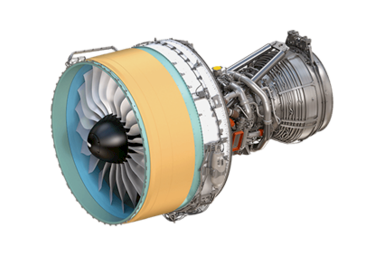
GP7000 engine by Engine Alliance. Image used for educational purposes.
MTU Aero Engines has a significant share in the GP7000 program, contributing to the development, manufacturing, and maintenance of important engine components. Its participation includes elements associated with both the Pratt & Whitney share and the GE Aerospace share within Engine Alliance.
| Parameter | Details |
|---|---|
| Program share | 22.5%. |
| Partnership model | Collaboration with GE Aerospace, Pratt & Whitney, and Safran Aircraft Engines. |
| Work scope | Development, manufacturing, and maintenance. |
In the portion associated with Pratt & Whitney, MTU is responsible for the low-pressure turbine. This module is essential for driving the fan and the low-pressure system by using the energy remaining in the gas flow after it leaves the high-pressure turbine.
| Component | Responsibility |
|---|---|
| Low-pressure turbine | Complete development and manufacturing. |
| Low-pressure turbine maintenance | Repairs performed by MTU Aero Engines in Munich, Germany. |
In the portion associated with GE Aerospace, MTU participates in structural and turbine-related components. This includes the Turbine Center Frame, known as the TCF, and components related to the high-pressure turbine.
| Component | Responsibility |
|---|---|
| Turbine Center Frame, or TCF | Development and manufacturing. |
| High-pressure turbine components | Component manufacturing. |
| Component | Work scope | Note |
|---|---|---|
| Low-pressure turbine | Development and manufacturing. | Pratt & Whitney share. |
| Turbine Center Frame | Development and manufacturing. | GE Aerospace share. |
| High-pressure turbine components | Manufacturing. | GE Aerospace share. |
| Low-pressure turbine maintenance | Repairs. | Performed in Munich, Germany. |
Maintenance of the GP7000 low-pressure turbine is performed by MTU Aero Engines in Munich. This support is important for maintaining the availability of engines installed on A380 aircraft that remain in operation.
| Facility | Location | Start year | Work scope |
|---|---|---|---|
| MTU Aero Engines | Munich, Germany | 2010 | Low-pressure turbine MRO. |
The GP7000 occupies a very specific position in the market because it was developed for the Airbus A380. Its application is tied to very high-capacity widebody aircraft designed for high-demand international routes.
| Segment | Details |
|---|---|
| Large widebody aircraft | Application on the Airbus A380. |
| Thrust | 70,000 to 81,500 lbf. |
| Competition | Rolls-Royce Trent 900, the alternative engine option for the A380. |
| Differentiator | Details |
|---|---|
| Technology combination | Combines solutions from the GE90 and PW4000 families. |
| Efficiency | Low cruise fuel consumption for its category. |
| Weight | Optimized weight for the thrust range. |
| Noise | Reduced noise emissions. |
| Reliability | Technology base derived from two proven engine families. |
| Aspect | GP7000 | Trent 900 |
|---|---|---|
| Manufacturer | Engine Alliance, GE Aerospace and Pratt & Whitney. | Rolls-Royce. |
| Thrust | Up to 81,500 lbf. | Up to approximately 80,000 lbf. |
| Application | Airbus A380. | Airbus A380. |
The GP7000 program brings together companies with extensive experience in the development and support of large aircraft engines. Engine Alliance coordinates the participation of GE Aerospace and Pratt & Whitney, with support from industrial partners such as Safran Aircraft Engines and MTU Aero Engines.
| Partner | Note |
|---|---|
| Engine Alliance | Joint venture between GE Aerospace and Pratt & Whitney. |
| GE Aerospace | Provides technology derived from the GE90 and participates in part of the engine. |
| Pratt & Whitney | Provides technology derived from the PW4000 and participates in part of the engine. |
| Safran Aircraft Engines | Program and industrial supply chain participant. |
| MTU Aero Engines | 22.5% program share, with development, manufacturing, and maintenance of components. |
The GP7000 entered service in 2008 and has accumulated more than 15 years of operation. Although it is associated with a very specific platform, the Airbus A380, the engine remains relevant because part of the fleet is still in service and requires continued technical support.
| Aspect | Details |
|---|---|
| Entry into service | 2008. |
| Time in operation | More than 15 years of service. |
| Fleet | Hundreds of engines installed on Airbus A380 aircraft. |
Airbus A380 production has ended, with the final delivery taking place in 2021. Even so, a significant portion of the fleet continues to operate, especially with airlines that use the aircraft on high-demand routes.
| Aspect | Details |
|---|---|
| A380 production | Ended, with the final delivery in 2021. |
| Fleet in operation | Still significant at selected airlines. |
| MRO demand | Continued technical support for the existing fleet. |
Because the A380 fleet is expected to remain in operation for many years, demand for GP7000 maintenance remains important. MTU Aero Engines plays a relevant role in this support, especially in work related to the low-pressure turbine.
The sustainability outlook for the GP7000 is linked to continued support for the existing fleet, efficient maintenance, and compatibility with sustainable aviation fuels, commonly known as SAF.
The GP7000 represents a specific technical solution for one of the most remarkable aircraft in commercial aviation: the Airbus A380. Its architecture combines technologies associated with the GE90 and PW4000, creating a high-thrust engine for long-haul operations.
MTU Aero Engines’ participation in the program, both in the low-pressure turbine and in the Turbine Center Frame and high-pressure turbine components, shows the industrial complexity involved in engines of this size.
Although A380 production has ended, the existing fleet still requires technical support, specialized maintenance, and spare parts. For that reason, the GP7000 remains relevant in the context of MRO and fleet support for very large widebody aircraft.