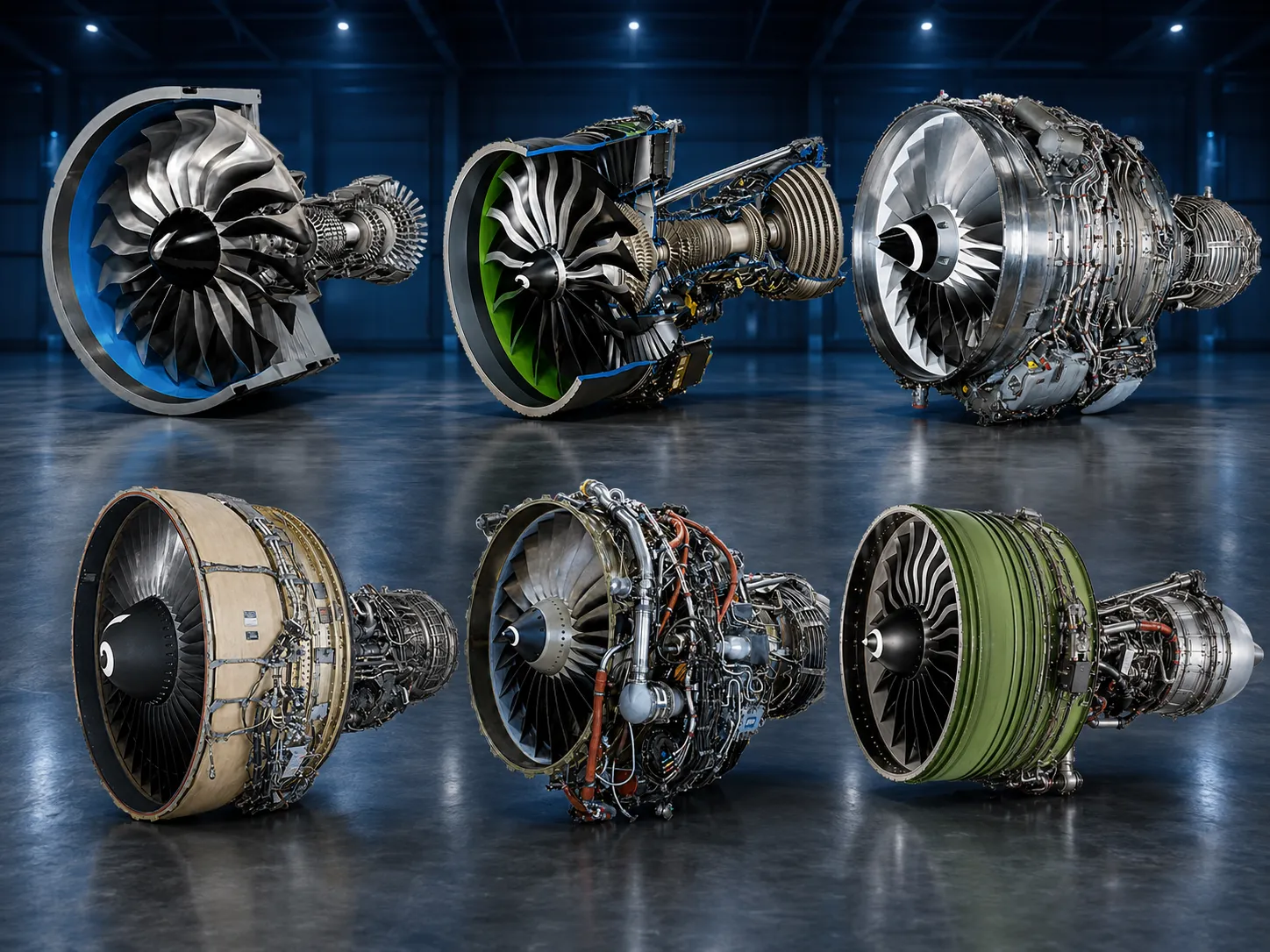
The GE9X, developed by General Electric, now GE Aerospace, is one of the most advanced propulsion systems ever built for long-haul commercial aircraft. It was specifically developed for the Boeing 777X family, a new-generation widebody aircraft designed for high-capacity international routes.
Drawing on experience from earlier GE engine programs, including the GE90 and GEnx, the GE9X brings together advanced materials, improved aerodynamics, a high overall pressure ratio, and technologies focused on operational efficiency. The goal is to provide greater efficiency for large twin-engine aircraft while reducing fuel burn, emissions, and noise compared with the previous generation.
The GE9X is a two-spool turbofan engine in the high-thrust category for widebody commercial aircraft. Its architecture follows the basic layout of modern large turbofans: a large front fan, high bypass airflow, compressors, a combustor, and turbines that extract energy from the hot gas stream.
This configuration builds on the core design philosophy of the GE90 and GEnx, while introducing major improvements in compression, combustion, materials, cooling, and exhaust flow. The result is an engine designed for large aircraft operating long-range missions with high efficiency.
In simple terms: the GE9X was designed to produce high thrust more efficiently by using a large fan, a high bypass ratio, a high overall pressure ratio, and materials capable of withstanding extreme temperatures.
| Parameter | Value |
|---|---|
| Maximum thrust | 134,300 lbf |
| Bypass ratio | 10:1 |
| Overall pressure ratio | 60:1 |
| Fan diameter | 11.2 ft, approximately 3.41 m |
| Fuel burn improvement | 10% lower than the GE90-115B |
| Expected entry into service | 2026 |
The GE9X uses a combination of advanced materials designed to reduce weight, increase thermal resistance, and improve durability. In large aircraft engines, material selection is critical because different sections of the engine operate under very high temperatures, pressures, and mechanical loads.
In addition to advanced materials, the GE9X uses refined aerodynamic design to improve the internal airflow through the engine. Blade geometry, duct design, and internal leakage control are all essential to improving overall engine efficiency.
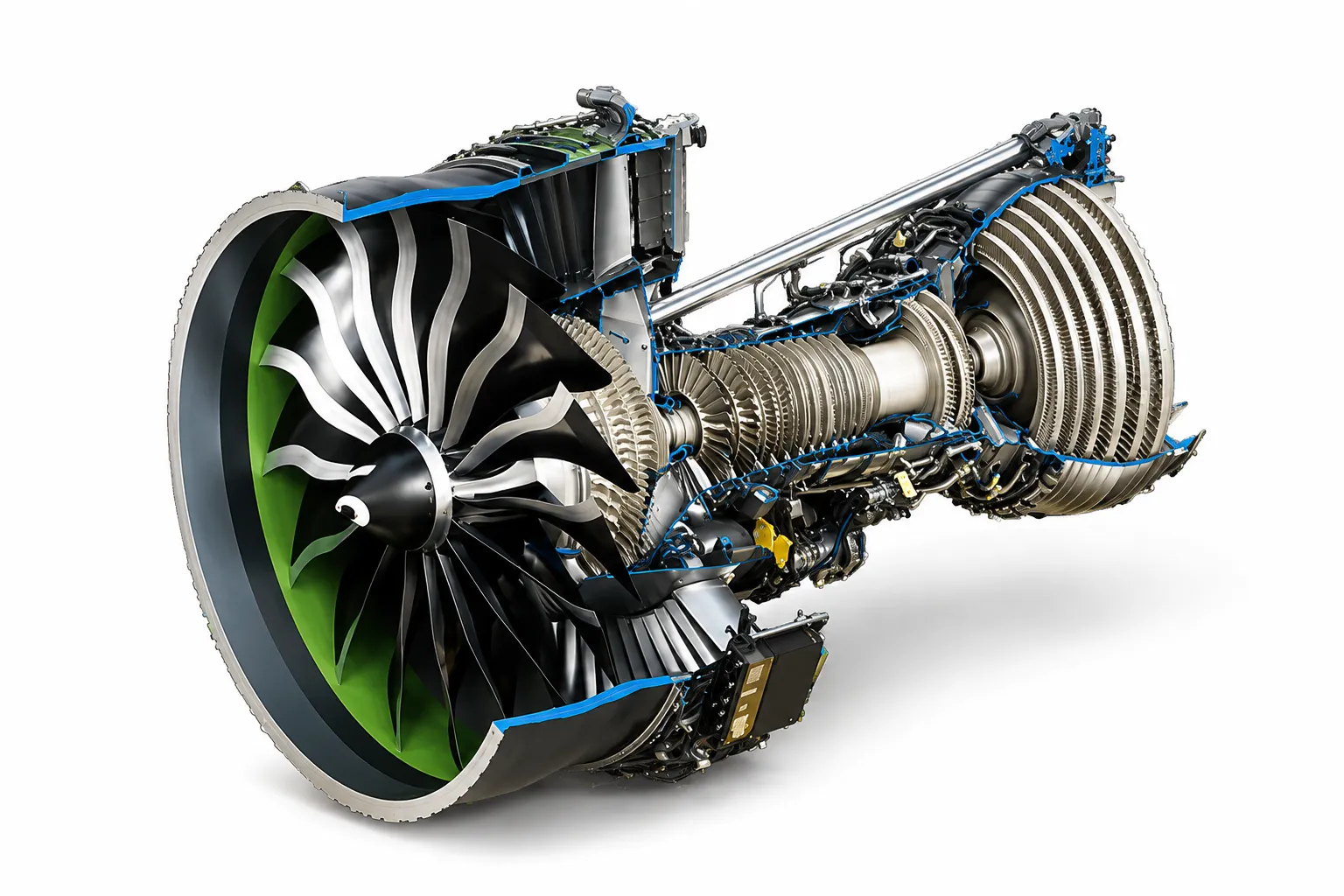
GE9X engine by GE Aerospace. Image used for educational purposes.
The GE9X was developed with a strong focus on efficiency and lower environmental impact compared with the previous generation. Lower fuel burn directly affects CO₂ emissions, since the amount of carbon dioxide produced is directly related to the amount of fuel burned during operation.
| Category | Improvement compared with the GE90-115B |
|---|---|
| Fuel burn | 10% reduction |
| CO₂ | Reduction proportional to fuel burn |
| NOx | Significant reduction, below CAEP/8 regulatory limits |
| Noise footprint | Substantial reduction |
The GE9X’s efficiency comes from the combination of a high overall pressure ratio, materials capable of operating at high temperatures, and a large-diameter fan. The 60:1 overall pressure ratio allows the engine cycle to extract more useful work from the airflow.
The higher turbine inlet temperature is supported by advanced materials such as ceramic matrix composites, along with advanced cooling systems. The large 11.2-foot fan is optimized to provide efficient propulsion during cruise flight.
MTU Aero Engines participates in the GE9X program with responsibility for the turbine center frame, or TCF. This is a critical structural component located in the turbine section and plays an important role in mechanical support, hot gas flow management, and system integration.
| Parameter | Details |
|---|---|
| Program share | 4% |
| Responsible component | Turbine Center Frame, or TCF |
| Scope of work | Development, manufacturing, and assembly |
The turbine center frame is a critical structural component of the engine. It operates in a high-temperature environment and must combine mechanical strength, thermal control, and integration with other engine systems.
MTU applies experience gained from previous engine programs to the development and production of turbine structural components. This background supports the company’s participation in the GE9X program.
| Program | Aircraft | Similar component |
|---|---|---|
| GP7000 | Airbus A380 | Engine core structures |
| GEnx | Boeing 787 Dreamliner and Boeing 747-8 | Turbine support structures |
In January 2016, MTU delivered the first TCF development module to General Electric. The Boeing 777X aircraft is expected to enter service in 2026.
MTU is expected to support maintenance activities for the turbine center frame, with MRO work planned in line with the engine’s life cycle.
| Feature | GE90-115B | GE9X | Improvement |
|---|---|---|---|
| Thrust | 115,000 lbf | 134,300 lbf | +16.8% |
| Pressure ratio | Approximately 42:1 | 60:1 | +42.8% |
| Bypass ratio | Approximately 9:1 | 10:1 | +11.1% |
| Fan diameter | 10.3 ft | 11.2 ft | +8.7% |
| Fuel burn | Baseline | 10% lower | 10% reduction |
The GE9X is the engine developed for the Boeing 777X family, which includes passenger and freighter variants. The aircraft family was designed for long-haul operations, with a focus on efficiency, capacity, and range.
The Boeing 777X requires engines with high thrust capability, fuel efficiency for long-haul operations, reliability for transoceanic and transpacific routes, and a lower noise footprint to meet airport and environmental regulations.
GE Aerospace is expected to maintain a global support network for the GE9X as the 777X fleet enters service and expands over time. MTU is also expected to support maintenance activities related to the turbine center frame.
Engine support includes integration with condition monitoring and predictive diagnostic systems, allowing continuous tracking of engine performance and early identification of potential maintenance needs.
The GE9X was designed for life cycles compatible with long-haul commercial operations. Its robust architecture, combined with advanced materials and condition monitoring, is intended to optimize maintenance intervals and reduce unscheduled interventions.
The GE9X represents a major step in the evolution of high-thrust turbofan engines. It demonstrates the feasibility of very high pressure ratios in commercial operation, the industrial-scale use of ceramic matrix composites, and the integration of composite materials into critical structural components.
Fuel burn reduction, lower emissions, and noise improvements position the GE9X as an engine aligned with the commercial aviation industry’s sustainability goals. In long-haul aircraft, even small percentage improvements in fuel burn can have a significant impact over the life of an aircraft fleet.
These advances help reduce the environmental impact of long-distance operations, improve airline efficiency, and support compliance with increasingly demanding regulatory requirements.
The GE9X represents one of the most advanced architectures ever developed for widebody commercial aircraft propulsion. Its design combines a large fan diameter, high bypass ratio, high overall pressure ratio, advanced materials, and aerodynamic refinements to achieve greater efficiency on long-haul missions.
MTU Aero Engines’ participation in the development and production of the turbine center frame highlights the importance of industrial collaboration in modern aircraft engine programs. In engines of this size and complexity, integration among the prime manufacturer, specialized suppliers, maintenance networks, and operators is essential to sustain performance throughout the life cycle.
Developed for the Boeing 777X family, the GE9X represents an important step in the evolution of high-thrust turbofan engines, combining performance, efficiency, and advanced technologies to meet the demands of large commercial aircraft.