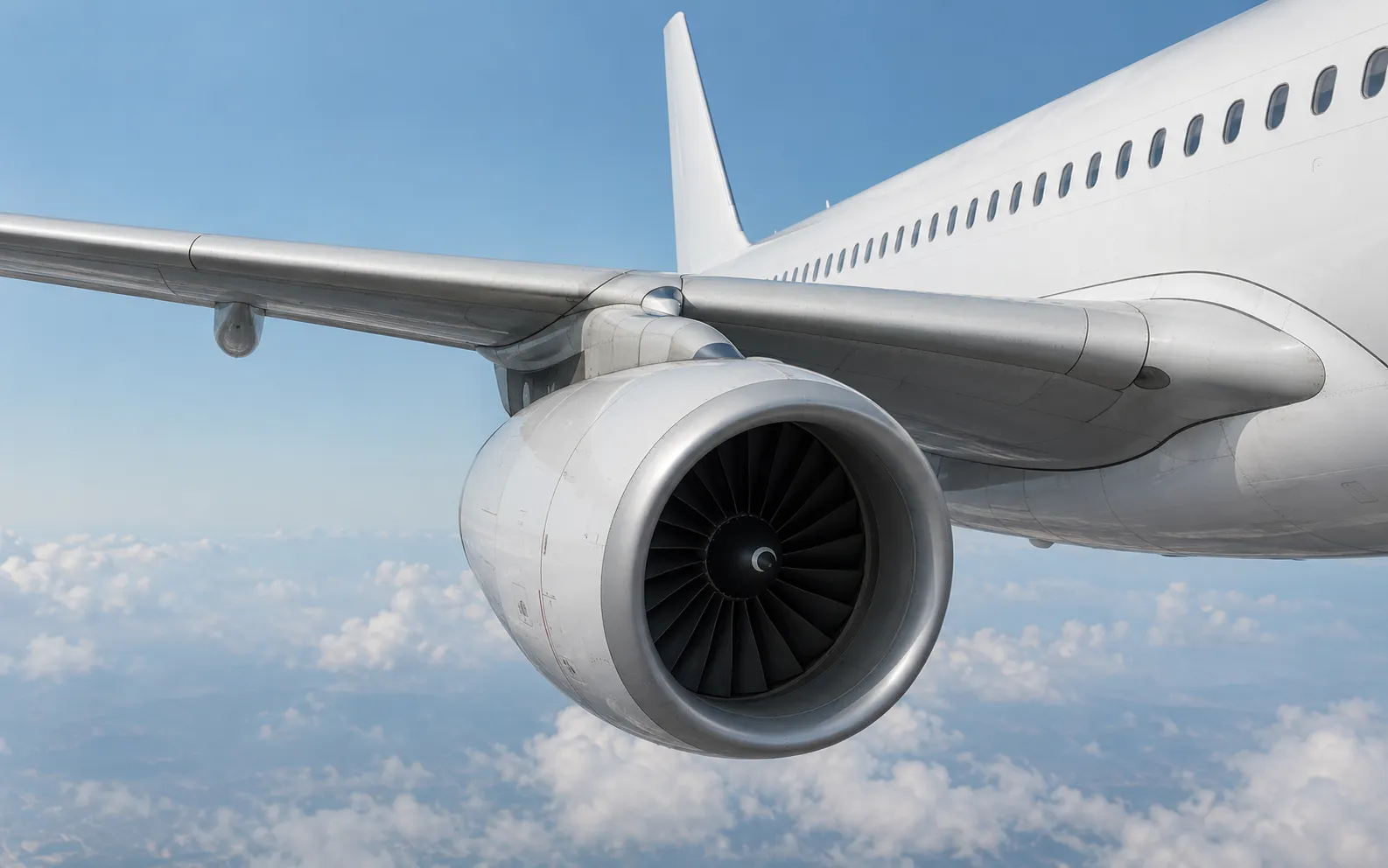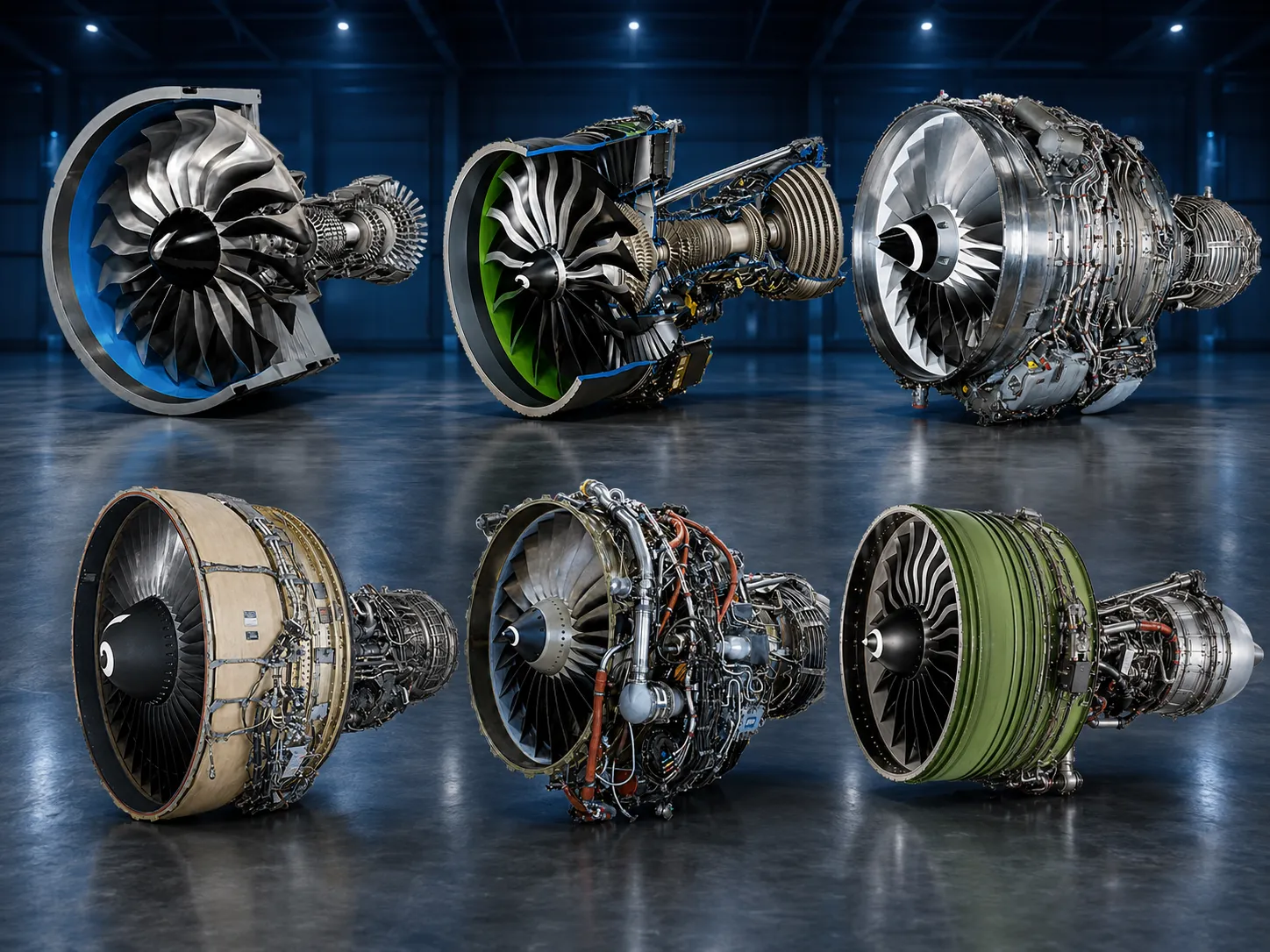
The Pratt & Whitney GTF™ engine family, also known as the Geared Turbofan family, represents an important step forward in commercial aircraft propulsion. Its main technical difference is the use of a reduction gearbox, which allows the fan and the low-pressure turbine to operate at different rotational speeds.
This architecture allows the fan to rotate more slowly, at a speed better suited for producing efficient thrust, while the low-pressure components inside the engine can rotate faster. The result is an engine architecture designed to reduce fuel burn, lower noise, reduce emissions, and improve overall energy efficiency.
This article presents a technical overview of the GTF engine family, including its propulsion architecture, main application-specific configurations, MTU Aero Engines’ industrial role, and the global maintenance, repair, and overhaul network that supports this engine family.
The GTF engine family uses a two-spool turbofan configuration with an epicyclic reduction gearbox positioned between the fan module and the low-pressure compressor. This mechanical solution addresses a fundamental aerodynamic compromise found in conventional turbofan engines: the difference between the ideal rotational speed of the fan and the ideal rotational speed of the engine’s low-pressure system.
In a conventional turbofan, the fan and the low-pressure system are mechanically connected on the same shaft. This forces the engine design to balance the speed needs of the fan against the speed needs of the low-pressure turbine. In the GTF architecture, the reduction gearbox allows these components to operate closer to their ideal speed ranges.
In simple terms: the reduction gearbox allows the fan to turn more slowly, while the low-pressure compressor and low-pressure turbine can operate at higher, more efficient rotational speeds.
The fan can operate at a speed optimized for propulsive efficiency, keeping blade tip speeds more controlled and helping reduce noise. At the same time, the low-pressure turbine and low-pressure compressor can operate at significantly higher rotational speeds, improving the efficiency of the internal engine components.
This separation of rotational speeds helps reduce aerodynamic loading per stage, improves the efficiency of internal airfoils, and reduces the number of compressor and turbine stages required, contributing to a lighter and more efficient engine.
The geared architecture allows the GTF family to achieve a high bypass ratio across its applications. Bypass ratio describes the relationship between the mass of air that flows around the hot core of the engine and the mass of air that passes through the core, where compression, combustion, and turbine work take place.
A high bypass ratio is one of the defining characteristics of modern commercial turbofan engines. It allows a large portion of the thrust to be produced by the cooler bypass flow around the engine core. This improves propulsive efficiency, reduces exhaust velocity, and helps lower noise.
In the GTF family, this strategy is supported by lower fan pressure ratios, increased mass flow through the bypass duct, and reduced exhaust velocity. Together, these factors help improve fuel efficiency and reduce the acoustic signature of the engine.
| Parameter | Value |
|---|---|
| Thrust range | 14,000 to 33,000 lbf |
| Bypass ratio | 12.5:1 |
| Overall pressure ratio | Approximately 50:1 |
| Entry into service | 2016 |
The PW1100G-JM is the GTF version developed for the Airbus A320neo family. This application uses the largest fan diameter within the GTF family and is optimized for single-aisle commercial aircraft.
The PW1500G powers the Airbus A220 family. This version was designed for integration with smaller airframes while maintaining the geared fan architecture and core technology commonality across the GTF family.
The PW1900G is used on the second-generation Embraer E-Jets. This version serves the modern regional jet segment, sharing the same fan diameter as the PW1500G while incorporating application-specific optimizations.
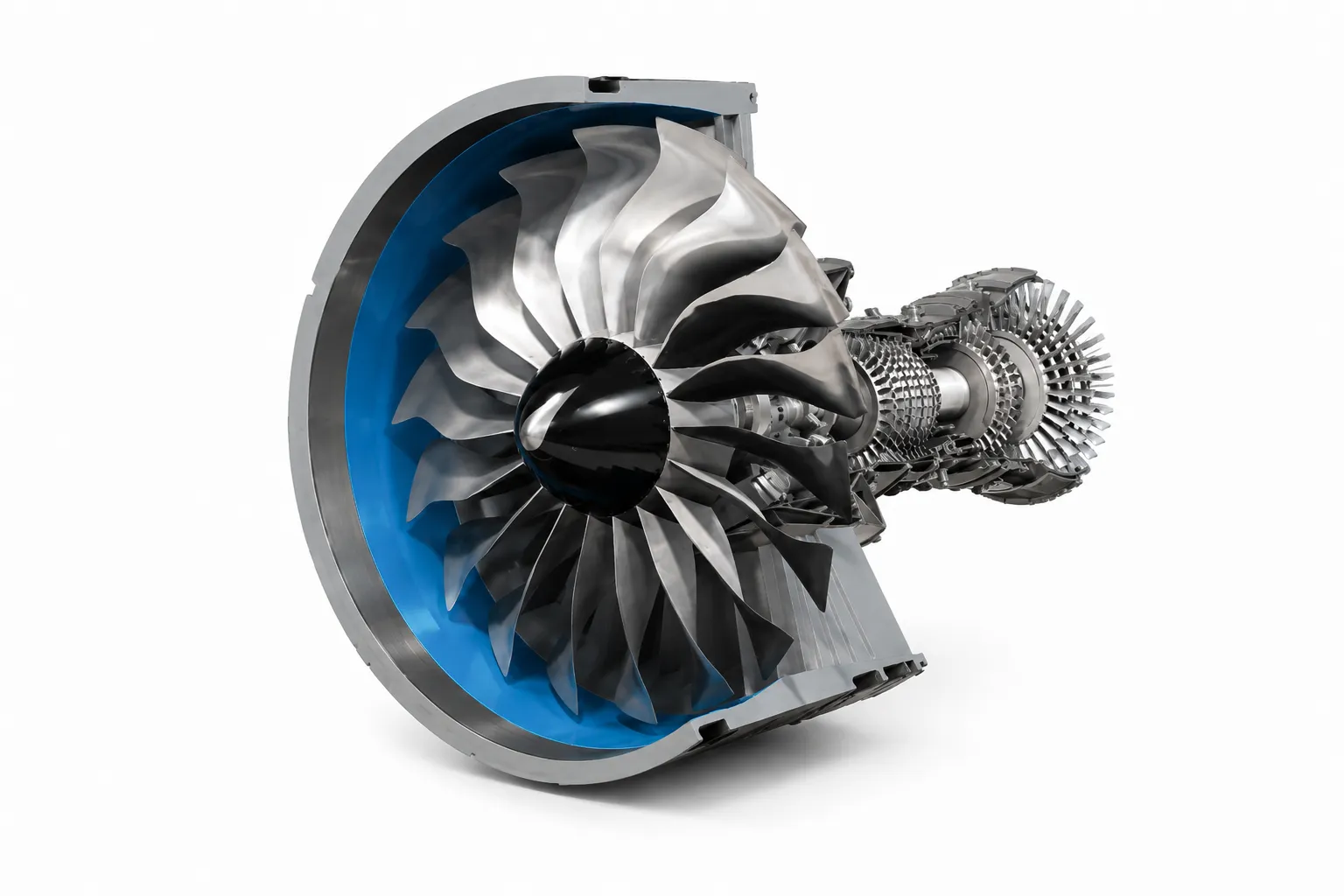
Pratt & Whitney GTF™ engine family. Image used for educational purposes.
The GTF family was developed with a strong focus on energy efficiency and reduced environmental impact. Its geared fan architecture contributes to lower fuel burn, reduced CO₂ emissions, lower NOx emissions, and a smaller noise footprint when compared with previous-generation aircraft.
| Emission category | Improvement compared with the previous generation |
|---|---|
| CO₂ | 20% reduction per trip |
| NOx | Up to 50% reduction |
| Noise footprint | 75% reduction |
These reductions result from a combination of factors, including combustion technology, improved thermodynamic efficiency, and a lower acoustic signature. Lower fan blade tip speeds and optimized fan blade geometry also contribute to reduced noise.
The engine’s overall efficiency also reduces specific fuel consumption, which lowers CO₂ emissions per trip depending on the aircraft, route, operational configuration, and comparison baseline.
MTU Aero Engines participates in GTF programs with industrial responsibilities related to development, component manufacturing, assembly, and maintenance support. This involvement highlights the complexity of the global supply chain behind modern aircraft engines.
| Program | MTU workshare | Main responsibilities |
|---|---|---|
| PW1100G-JM | 18% | HPC stages 1 through 4, high-speed LPT, brush seals, and final assembly of part of the production. |
| PW1500G | 15% | HPC stages 1 through 4, high-speed LPT, and brush seals. |
| PW1900G | 15% | HPC stages 1 through 4, high-speed LPT, and brush seals. |
MTU’s design scope includes the first four stages of the high-pressure compressor. These components require advanced aerodynamic design because they operate at high rotational speeds and under demanding thermal and mechanical conditions.
One of the technologies used is the blisk, a component in which the disk and blades are integrated into a single piece. This design reduces weight, improves structural integrity, and contributes to compressor aerodynamic performance.
MTU is also involved in the development and manufacturing of the high-speed low-pressure turbine. This module is especially important in the GTF architecture because it operates at higher rotational speeds than in many conventional turbofan designs, while the reduction gearbox allows the fan to rotate more slowly.
The turbine airfoils are optimized for high-speed operation. A reduced number of stages contributes to lower engine weight, while advanced cooling technologies help improve component durability.
Brush seals are used to reduce internal leakage between rotating and stationary components. In aircraft engines, even small internal air leaks can affect overall efficiency. For that reason, sealing systems play an important role in engine performance and reliability.
MTU’s Munich facility participates in final assembly for a portion of the PW1100G-JM engines produced for the Airbus A320neo family. This responsibility goes beyond component manufacturing and reinforces MTU’s role within the global GTF industrial ecosystem.
Maintenance for modern aircraft engines requires a global support network. In the case of the GTF family, this network includes facilities dedicated to maintenance, repair, and overhaul, commonly known as MRO.
| Facility | Location | Start year | Work scope |
|---|---|---|---|
| MTU Maintenance | Hannover, Germany | 2016 | Full engine MRO |
| MTU Maintenance | Zhuhai, China | 2016 | Full engine MRO |
| EME Aero | Poland | 2016 | Full engine MRO |
| MTU | Munich, Germany | 2016 | Full engine MRO |
| Facility | Location | Start year | Work scope |
|---|---|---|---|
| EME Aero | Poland | 2021 | Full engine MRO |
| Facility | Location | Start year | Work scope |
|---|---|---|---|
| EME Aero | Poland | 2023 | Full engine MRO |
Pratt & Whitney has announced the GTF Advantage™ configuration for the Airbus A320neo family. This evolution incorporates aerodynamic improvements, enhanced thermal management, and additional efficiency gains compared with the baseline configuration.
The goal of the GTF Advantage™ is to continue the evolution of the GTF family while maintaining the geared fan architecture and adding improvements related to performance, durability, and operational efficiency.
The GTF architecture has room for continued development over time. Key areas include potential thrust growth, continuous efficiency improvements, and compatibility with sustainable aviation fuels, commonly known as SAF.
Advanced materials, improved cooling technologies, and aerodynamic refinements may further improve specific fuel consumption and the environmental performance of the family.
The Pratt & Whitney GTF™ engine family shows how an innovative mechanical architecture can be combined with a complex global industrial partnership. The reduction gearbox, which allows the fan and low-pressure components to operate at different speeds, is one of the most important features of this engine family.
MTU’s role in the GTF programs, including design, manufacturing, assembly, and maintenance activities, illustrates how modern aircraft engine programs depend on specialized companies working across a global supply chain. The established MRO network is also essential to support a growing fleet across multiple aircraft segments.
The published reductions in CO₂, NOx, and noise footprint position the GTF family as an important contribution to aviation sustainability. With the evolution toward the GTF Advantage™ configuration, this architecture continues to develop in response to future demands for efficiency, reliability, and lower environmental impact.