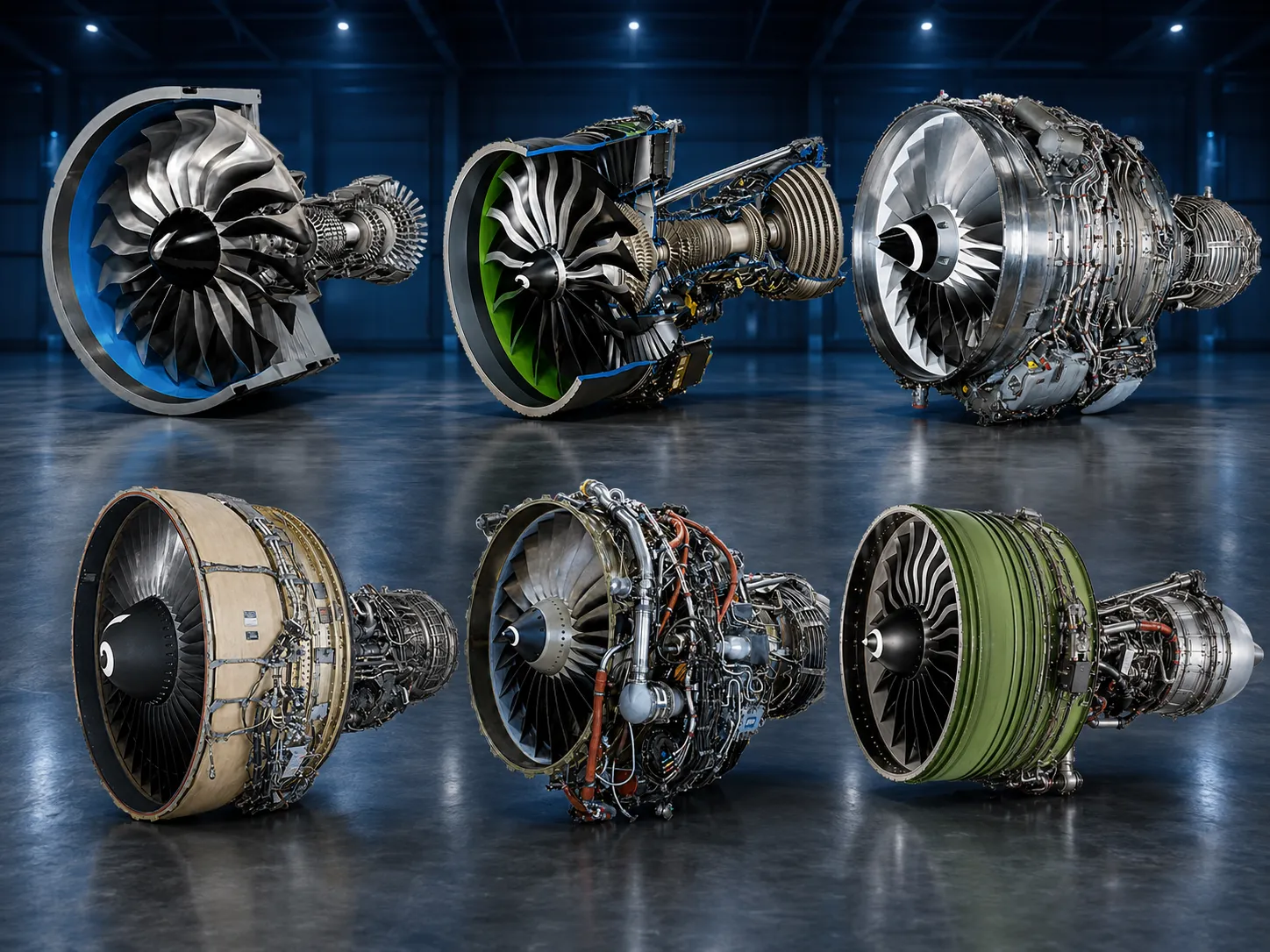
The GEnx, developed by GE Aerospace, is a two-spool turbofan engine family created for new-generation widebody aircraft. The engine builds on experience gained from the GE90 program and was designed to succeed the CF6, one of the most successful engine families in large commercial aviation.
Using advanced materials, improved aerodynamics, and modern design techniques, the GEnx was developed to reduce weight, noise, emissions, and maintenance costs while improving operational efficiency on medium- and long-haul flights.
The GEnx family is offered in two main versions: the GEnx-1B, developed for the Boeing 787 Dreamliner, and the GEnx-2B, developed for the Boeing 747-8, the modernized version of the legendary Boeing 747.
The GEnx is a two-spool turbofan engine positioned in the 66,500 to 76,100 lbf thrust range, depending on the version. Its architecture inherits key elements from the GE90 while incorporating newer materials, improved aerodynamic efficiency, and technologies designed to reduce fuel consumption.
As a high-bypass turbofan, the GEnx uses a large front fan to move a significant mass of air. Part of that air enters the engine core, where it is compressed, mixed with fuel, burned, and expanded through the turbines. The rest of the air flows through the bypass duct, contributing to thrust generation with greater propulsive efficiency.
In simple terms: the GEnx is a modern widebody turbofan designed to deliver better efficiency, lower noise, lower emissions, and reduced maintenance costs compared with earlier-generation engines.
| Parameter | GEnx-2B | GEnx-1B |
|---|---|---|
| Maximum thrust | 66,500 lbf | 69,800 to 76,100 lbf |
| Takeoff bypass ratio | 8.0:1 | 8.8 to 9.0:1 |
| Takeoff overall pressure ratio | 44.7:1 | 43.8 to 47.4:1 |
| Length | 14.2 ft, approximately 4.33 m | 15.4 ft, approximately 4.69 m |
| Fan diameter | 8.8 ft, approximately 2.68 m | 9.25 ft, approximately 2.82 m |
| Entry into service | 2012 | 2012 |
The GEnx combines technologies designed to improve thermodynamic efficiency, reduce structural weight, lower noise, and increase component durability. These features are especially important for widebody aircraft, which operate long sectors and accumulate many flight hours.
| Technology | Description and benefit |
|---|---|
| Advanced materials | Use of ceramic matrix composites, modern alloys, and lighter materials in critical engine areas. |
| Composite fan blades | Fan blades with titanium leading edges, aerodynamically optimized for efficiency and durability. |
| GE90-derived architecture | Technology base validated by millions of flight hours in commercial operation. |
| Low noise design | Acoustic design features developed to reduce the engine’s noise footprint during operation. |
| Fuel efficiency | Architecture designed to improve specific fuel consumption in the widebody category. |
| Lower emissions | Optimized combustor design aimed at reducing emissions, especially nitrogen oxides. |
The GEnx-1B was developed to power the Boeing 787 Dreamliner family. This version was designed for medium-capacity widebody aircraft, with a strong focus on efficiency, range, lower noise, and reduced fuel burn.
The GEnx-2B was developed for the Boeing 747-8, in both passenger and freighter versions. This variant was adapted to the 747-8 architecture, providing a modern propulsion solution for the latest version of the Boeing 747.
| Aircraft | Engine version | Note |
|---|---|---|
| Boeing 787-8 | GEnx-1B | Base version of the Dreamliner family. |
| Boeing 787-9 | GEnx-1B | Stretched version of the Boeing 787. |
| Boeing 787-10 | GEnx-1B | Largest variant of the Boeing 787. |
| Boeing 747-8I | GEnx-2B | Passenger version of the Boeing 747-8. |
| Boeing 747-8F | GEnx-2B | Freighter version of the Boeing 747-8. |
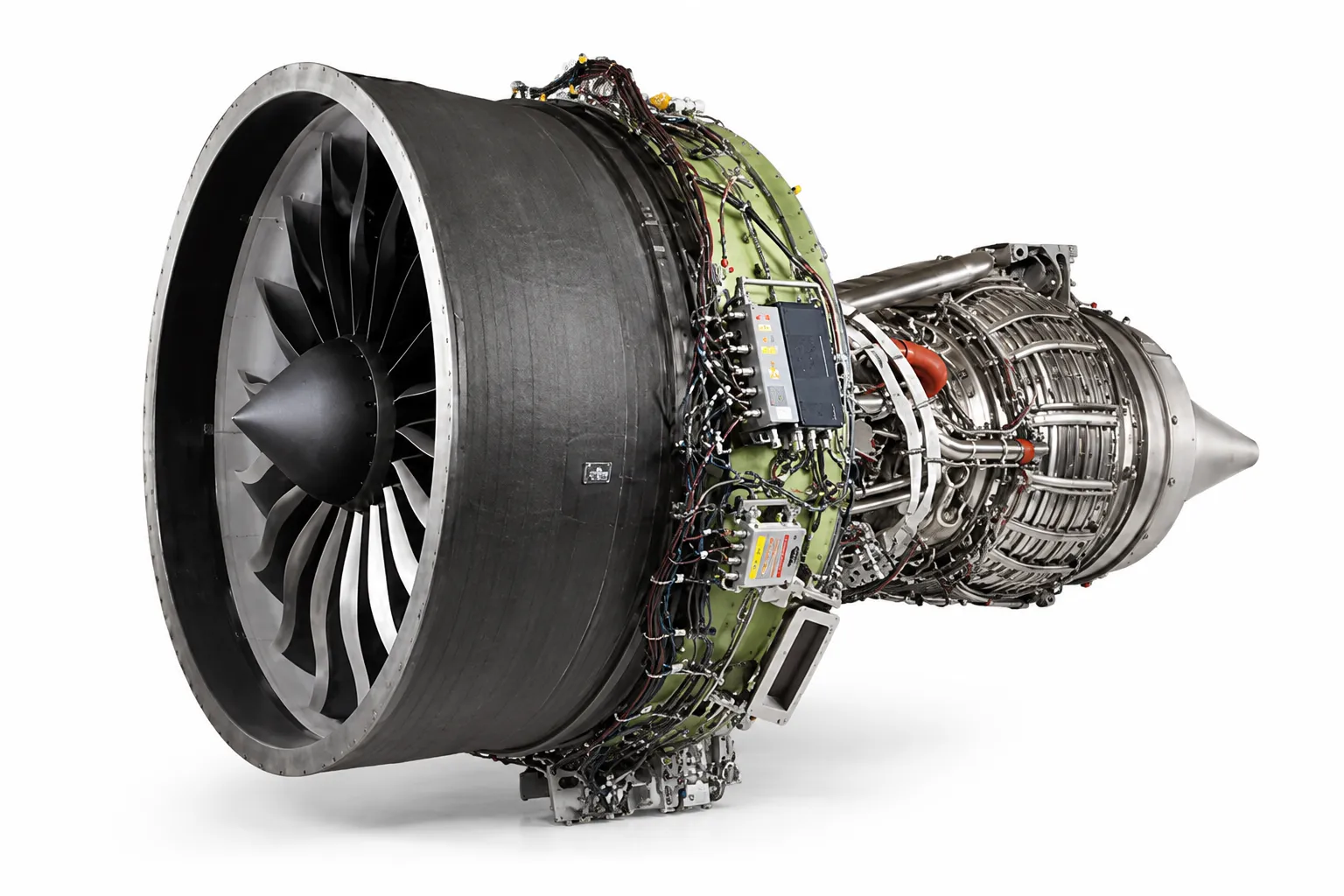
GEnx engine by GE Aerospace. Image used for educational purposes.
MTU Aero Engines participates in the GEnx program as a risk- and revenue-sharing partner. Its role is focused on a critical structural engine component: the Turbine Center Frame, or TCF.
| Parameter | Details |
|---|---|
| Program share | 6.7% |
| Partnership model | Risk- and revenue-sharing partner. |
| Responsible component | Turbine Center Frame, or TCF. |
| Scope of work | Development, manufacturing, and assembly. |
The Turbine Center Frame is a structural component located in the hot section of the engine. It helps support turbine-related elements, channels the hot gas flow, and contributes to the integration of internal systems.
| Aspect | Details |
|---|---|
| Function | Critical structural component that supports elements associated with the low-pressure turbine and helps guide the hot gas flow. |
| Previous experience | MTU applies knowledge gained from programs such as the GP7000, used on the Airbus A380. |
| Manufacturing locations | MTU Aero Engines in Munich, Germany, and MTU Aero Engines Polska. |
| TCF maintenance | MTU Maintenance Hannover, starting in 2015. |
MTU Maintenance Fort Worth, in the United States, is associated with GEnx support capability through a GE Aerospace Branded Services Agreement. This type of agreement expands authorized and standardized service capability for operators.
| Aspect | Details |
|---|---|
| Facility | MTU Maintenance Fort Worth, United States. |
| Partnership | GE Aerospace Branded Services Agreement, known as GBSA. |
| Benefits | Training, technical support, access to proprietary repair technologies, and authorized service capability. |
| Facility | Location | Start year | Work scope |
|---|---|---|---|
| MTU Maintenance | Hannover, Germany | 2015 | Turbine Center Frame MRO. |
| Facility | Location | Status | Work scope |
|---|---|---|---|
| MTU Maintenance | Fort Worth, United States | Planned for future operation | Full GEnx engine overhaul. |
The GE Aerospace Branded Services Agreement, or GBSA, is an agreement focused on authorized services performed according to technical standards defined by GE Aerospace. This model helps provide greater consistency in repair, overhaul, and customer support processes.
| Aspect | Details |
|---|---|
| Agreement type | GE Aerospace Branded Services Agreement, or GBSA. |
| Duration | Long term. |
| Benefits for MTU | Authorization as a service provider, access to repair technology, and technical support from GE. |
| Benefits for customers | Standardized service, GE-aligned quality, and compliance with original specifications. |
The GEnx was developed to succeed the CF6 in part of the widebody engine market. The purpose of the program was to provide a new generation of propulsion with better efficiency, lower weight, lower noise, and reduced emissions.
| Feature | GEnx-1B | GEnx-2B |
|---|---|---|
| Thrust | 69,800 to 76,100 lbf | 66,500 lbf |
| Bypass ratio | 8.8 to 9.0:1 | 8.0:1 |
| Pressure ratio | 43.8 to 47.4:1 | 44.7:1 |
| Fan diameter | 9.25 ft | 8.8 ft |
| Length | 15.4 ft | 14.2 ft |
| Application | Boeing 787 Dreamliner | Boeing 747-8 |
The GEnx program involves a broad industrial supply chain made up of companies specialized in design, manufacturing, component supply, and technical support.
| Partner | Role |
|---|---|
| GE Aerospace | Program leader and engine designer. |
| Safran Aircraft Engines | Long-time partner in GE engine programs. |
| Safran Aero Boosters | Component supplier for the program. |
| IHI Corporation | Participant in the supply chain. |
| GKN Aerospace | Supplier of structural components. |
| Hanwha | Participant in the supply chain. |
The GEnx entered service in 2012 and began powering Boeing 787 and Boeing 747-8 aircraft in commercial operation. Its presence on modern widebody aircraft reinforces its importance as a reference engine for a new generation of medium- and long-haul flights.
| Aspect | Details |
|---|---|
| Entry into service | 2012. |
| Fleet in operation | Engines installed on Boeing 787 and Boeing 747-8 aircraft. |
| Position | Reference engine for new-generation widebody aircraft. |
Demand for GEnx maintenance is expected to follow the growth and gradual aging of the Boeing 787 fleet. As more engines accumulate cycles and flight hours, the importance of an MRO network capable of technical support, specialized repairs, and full overhauls will continue to increase.
The GEnx helped renew widebody propulsion by replacing older technologies with meaningful efficiency improvements. Its use on the Boeing 787 Dreamliner and Boeing 747-8 shows how the engine was adapted to two different large-aircraft missions.
The GEnx represents an important evolution in GE Aerospace’s commercial engine family. It combines the operational experience of the GE90 with newer technologies focused on weight reduction, improved efficiency, lower noise, and reduced emissions.
The GEnx-1B and GEnx-2B versions demonstrate the flexibility of the architecture, allowing application on both the Boeing 787 Dreamliner and the Boeing 747-8. Although they serve different aircraft, both share the same goal: providing more efficient propulsion for widebody operations.
MTU Aero Engines’ participation in the Turbine Center Frame and maintenance support highlights the importance of industrial partnerships in building and sustaining modern aircraft engines. In programs of this scale, performance, reliability, and life-cycle support depend on a highly specialized technical supply chain.