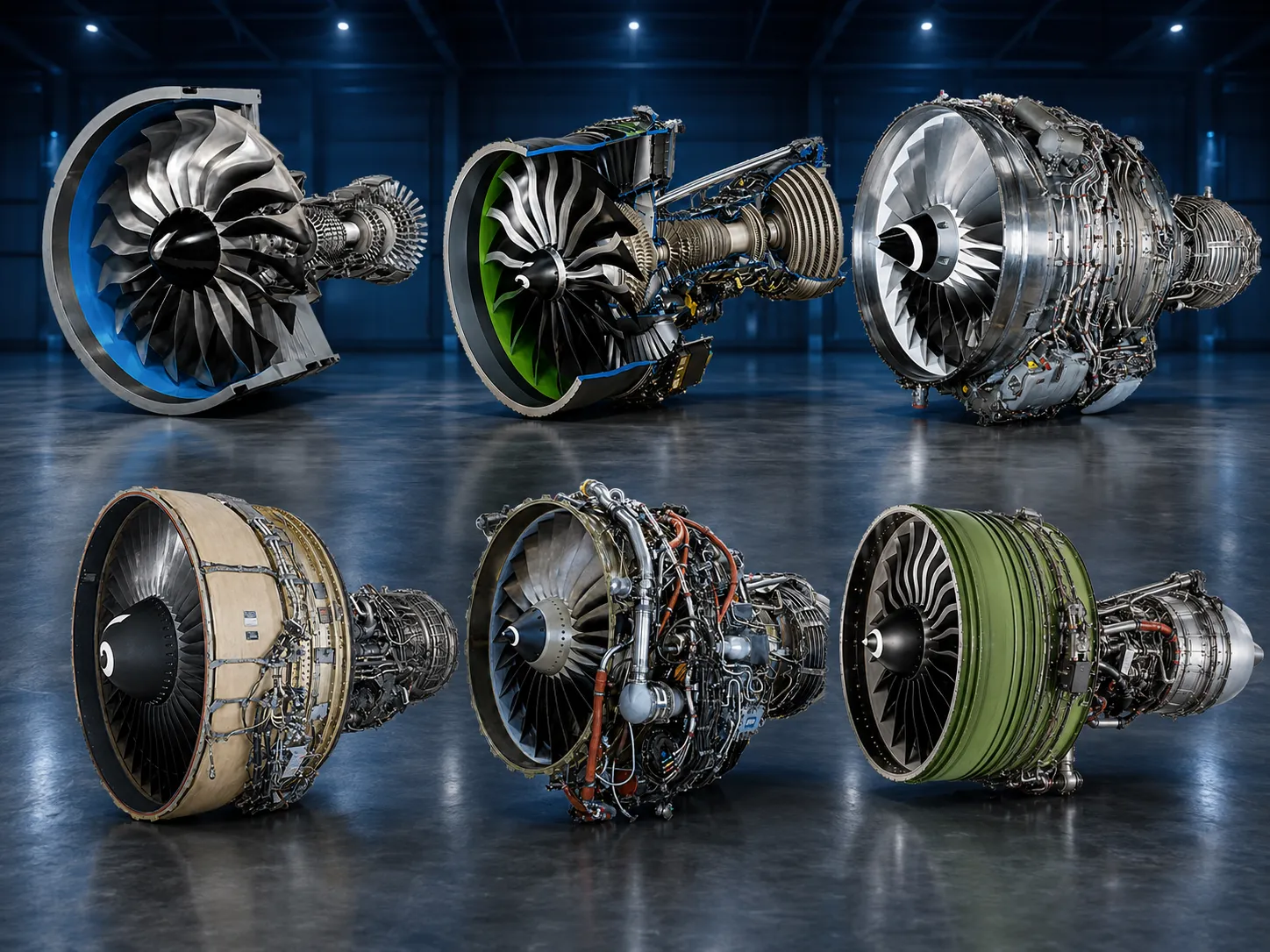
The PW300 family, developed by Pratt & Whitney Canada, was created to support a wide range of business jets and selected regional aircraft applications. Since 1985, MTU Aero Engines has worked with Pratt & Whitney Canada on this engine family, establishing a long-standing industrial partnership in the business aviation segment.
The PW300 engines are two-spool turbofans designed to deliver efficiency, reliability, and low operating costs for midsize and large business aircraft. The family includes variants such as the PW305, PW306, and PW307, each adapted to different thrust levels and aircraft platforms.
Over more than three decades of service, the PW300 has built a reputation for technical robustness and application flexibility. Its use on aircraft such as the Dassault Falcon 7X, Falcon 8X, Gulfstream G200, Learjet 60, and Cessna Citation Latitude shows the broad reach of this engine family in the business aviation market.
The PW300 is a two-spool turbofan engine positioned in the approximate 4,700 to 7,000 lbf thrust range, depending on the version. This category allows the engine to power light, midsize, and large business jets, as well as selected regional aircraft.
As a turbofan, the PW300 uses a front fan to move air through the engine. Part of this airflow enters the core, where it goes through compression, combustion, and expansion through the turbines. The remaining airflow moves through the bypass duct, helping generate thrust more efficiently and quietly.
In simple terms: the PW300 is a turbofan engine family designed mainly for business jets, combining reliability, efficiency, easier maintenance, and a flexible architecture for different aircraft platforms.
| Parameter | PW305 | PW306 | PW307 |
|---|---|---|---|
| Maximum takeoff thrust | 4,700 lbf | 6,000 lbf | 6,400 lbf |
| Length | 6.7 ft, approximately 2.04 m | 6.3 ft, approximately 1.92 m | 7.2 ft, approximately 2.19 m |
| Width | 3.0 ft, approximately 0.91 m | 3.2 ft, approximately 0.98 m | 3.4 ft, approximately 1.04 m |
| Height | 3.7 ft, approximately 1.13 m | 3.7 ft, approximately 1.13 m | 3.9 ft, approximately 1.19 m |
| Entry into service | 1992 | 1992 | 1992 |
The internal architecture of the PW300 family combines solutions aimed at aerodynamic efficiency, durability, and easier maintenance. Key features include blisks in the compressor, variable inlet guide vanes, and a low-pressure turbine developed with MTU participation.
| Component | Stages | Note |
|---|---|---|
| Fan | 1 stage | Fan with large airfoil height, optimized for propulsive efficiency. |
| Compressor | 5 stages | Four axial stages and one radial stage, all using blisk technology. |
| Inlet guide vanes | Variable | Variable Inlet Guide Vanes, or VIGVs, used to optimize airflow at different operating conditions. |
| High-pressure turbine | 2 stages | Uses cooled single-crystal blades for improved thermal resistance. |
| Low-pressure turbine | 3 stages | Component under MTU Aero Engines’ full responsibility. |
The PW300 family incorporates technologies that help reduce weight, improve airflow efficiency, and increase the durability of components exposed to high temperatures. These solutions are especially important in business aviation, where reliability and aircraft availability are essential.
| Technology | Description and benefit |
|---|---|
| Blisks in all compressor stages | Integration of the disk and blades into monolithic components across all five compressor stages, reducing weight and improving aerodynamic efficiency. |
| Single-crystal turbine blades | Single-crystal structure without grain boundaries, with cooling for greater thermal resistance. |
| Variable inlet guide vanes | Airflow optimization across different engine operating regimes. |
| Modular design | Configuration that supports easier inspection, maintenance, and shorter repair times. |
| Large-airfoil-height fan | Design focused on high propulsive efficiency and business aircraft performance. |
The PW305 is the lower-thrust version among the main PW300 variants. It was optimized for light and midsize business jets while preserving the reliability and efficiency philosophy of the family.
The PW306 occupies an intermediate thrust range within the family. Its application across different aircraft demonstrates the flexibility of the architecture, supporting everything from midsize business jets to smaller regional aircraft.
The PW307 is the highest-thrust version among the main variants described here. It was developed for large three-engine business jets such as the Dassault Falcon 7X and Dassault Falcon 8X.
| Aircraft | Engine version | Note |
|---|---|---|
| Dassault Falcon 7X | PW307 | Large-cabin trijet business aircraft. |
| Dassault Falcon 8X | PW307 | Ultra-long-range trijet business aircraft. |
| Bombardier Learjet 60 | PW305 | Midsize business jet. |
| Hawker Beechcraft 1000 | PW305 | Midsize business jet. |
| Gulfstream G200 | PW306 | Large business jet. |
| Fairchild Dornier 328Jet | PW306 | Regional jet with approximately 30 seats. |
| Cessna Citation Sovereign | PW306 | Midsize business jet. |
| Cessna Citation Sovereign+ | PW306 | Updated version of the Citation Sovereign. |
| Cessna Citation Latitude | PW306 | Midsize business jet. |
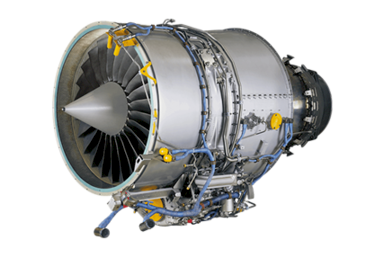
PW300 engine by Pratt & Whitney Canada. Image used for educational purposes.
MTU Aero Engines’ participation in the PW300 family began in 1985 through its partnership with Pratt & Whitney Canada. The company contributes to development, manufacturing, engine testing, and maintenance, with different program shares depending on the engine variant.
| Parameter | Details |
|---|---|
| Partnership start | 1985. |
| PW305 share | 25%. |
| PW306 share | 25%. |
| PW307 share | 15%. |
| Component under responsibility | Complete low-pressure turbine, including the exit case and mixer. |
| Work scope | Development, manufacturing, engine testing, and maintenance. |
The low-pressure turbine, or LPT, is one of the main components under MTU responsibility in the PW300 family. This three-stage module helps convert energy from the exhaust gas flow into mechanical power for the low-pressure system.
| Aspect | Details |
|---|---|
| Stages | Three complete stages. |
| Components | Blades, disks, stators, and associated structures. |
| Exit case | Support structure located at the turbine outlet. |
| Mixer | Component that helps mix airflow streams and contributes to noise reduction. |
| Work scope | Complete development and manufacturing. |
In addition to component development and manufacturing, MTU also participates in engine testing activities related to validation. These tests are essential to confirm performance, durability, and compliance before entry into service.
MTU Maintenance Berlin-Brandenburg in Germany supports maintenance, repair, and overhaul for the PW300 family. This full MRO capability is important for sustaining a mature and widely used fleet.
| Facility | Location | Start year | Work scope |
|---|---|---|---|
| MTU Maintenance | Berlin-Brandenburg, Germany | 2002 | Full engine MRO. |
| Metric | Value |
|---|---|
| Shop visits through 2025 | More than 400. |
| Capability | Full engine overhaul, or engine MRO. |
The PW300 was developed to provide a balanced combination of performance, reliability, and easier maintenance. The family uses technologies such as blisks, cooled single-crystal blades, and variable inlet guide vanes while maintaining an architecture well suited to business aircraft.
| Aspect | Details |
|---|---|
| Design | Two-spool turbofan. |
| Thrust | 4,700 to 6,400 lbf in the main variants described. |
| Technology | Blisks, single-crystal blades, and variable inlet guide vanes. |
| Maintenance | Modular design focused on easier repair. |
The PW300 family is positioned mainly in the midsize and large business jet market, with selected regional aircraft applications. This flexibility helped expand its presence across different types of operations.
| Segment | Details |
|---|---|
| Midsize business jets | Learjet 60, Hawker 1000, and Citation Sovereign. |
| Large business jets | Gulfstream G200, Dassault Falcon 7X, and Dassault Falcon 8X. |
| Regional jets | Fairchild Dornier 328Jet. |
| Thrust range | 4,700 to 6,400 lbf in the main variants described. |
| Differentiator | Details |
|---|---|
| Advanced technology | Use of blisks, single-crystal blades, and variable inlet guide vanes. |
| Reliability | More than 30 years of continuous evolution and operation across different platforms. |
| Flexibility | Wide range of business and regional aircraft applications. |
| Maintenance | Modular design with MTU MRO support. |
| Industrial partnership | Collaboration between MTU Aero Engines and Pratt & Whitney Canada since 1985. |
The PW300 program is led by Pratt & Whitney Canada, with MTU Aero Engines playing a major role in the development, manufacturing, testing, and maintenance of important components within the engine architecture.
| Partner | Note |
|---|---|
| Pratt & Whitney Canada | Program leader, responsible for engine development, marketing, and integration. |
| MTU Aero Engines | Responsible for the development and manufacturing of the low-pressure turbine, as well as testing and MRO activities. |
The PW300 family entered service in 1992 and has accumulated more than 30 years of operation. This longevity demonstrates the maturity of the architecture and the confidence that aircraft manufacturers and operators have placed in the engine family.
| Aspect | Details |
|---|---|
| Entry into service | 1992. |
| Time in operation | More than 30 years of service. |
| Fleet | Hundreds of engines in operation on business and regional aircraft. |
Although the PW300 is a mature engine family, it remains relevant because of the existing fleet and the continuing need for technical support. Demand for MRO, spare parts, and updates is expected to follow the continued operation of these aircraft.
The sustainability outlook for the PW300 family is linked to efficient maintenance of the existing fleet, compatibility with sustainable aviation fuels, and optimized operation within its category.
The PW300 represents an important turbofan engine family for business and regional aviation. Its two-spool architecture, combined with blisk compressor technology, single-crystal blades, and modular design, provides a reliable solution for aircraft of different sizes.
MTU Aero Engines’ participation, especially in the complete low-pressure turbine, shows the importance of industrial partnerships in modern aircraft engine development. Beyond design and manufacturing, MTU’s role in testing and MRO strengthens life-cycle support for the family.
With more than 30 years of operation, the PW300 remains a mature and technically well-established engine family, especially on business aircraft that continue to operate around the world.