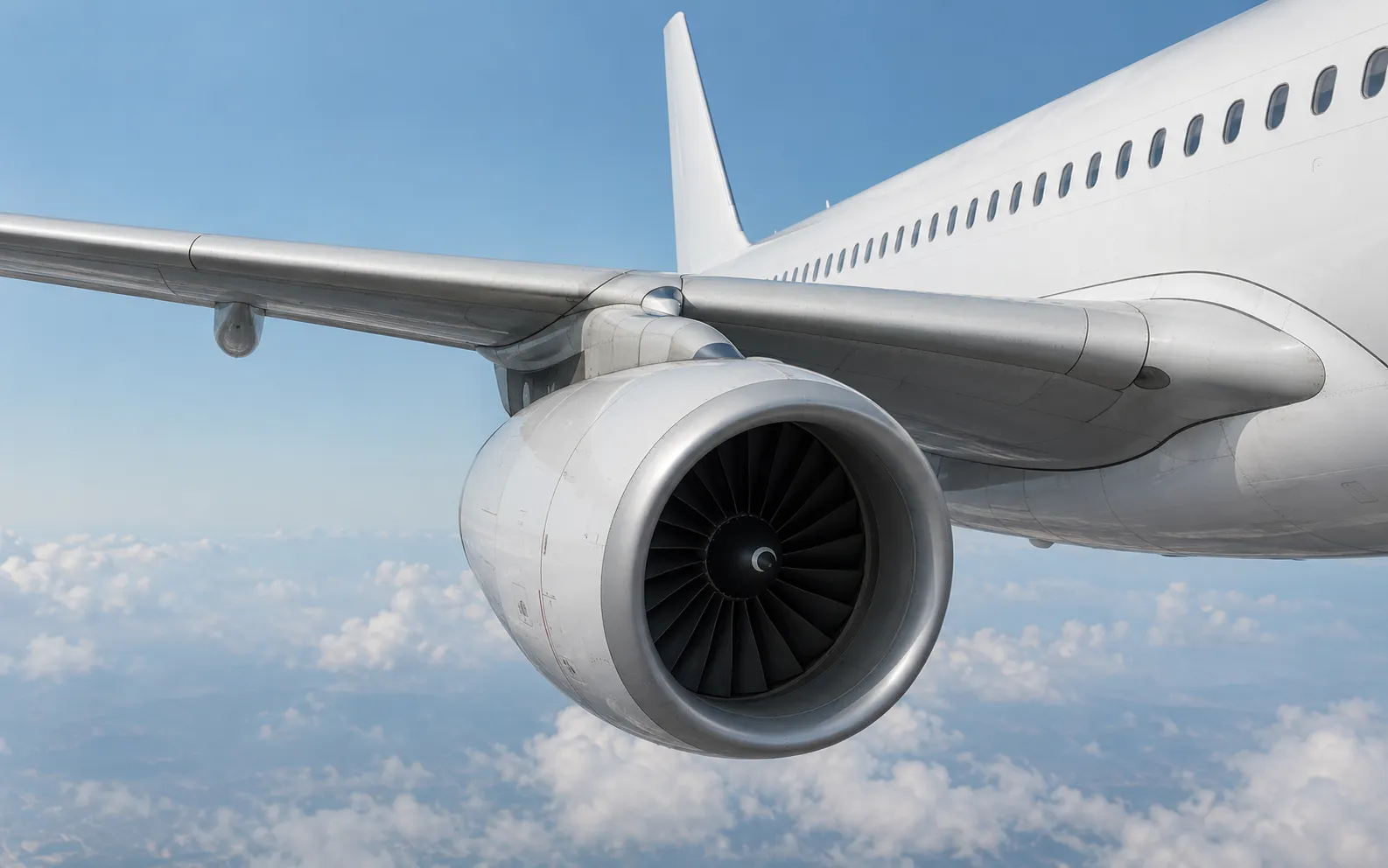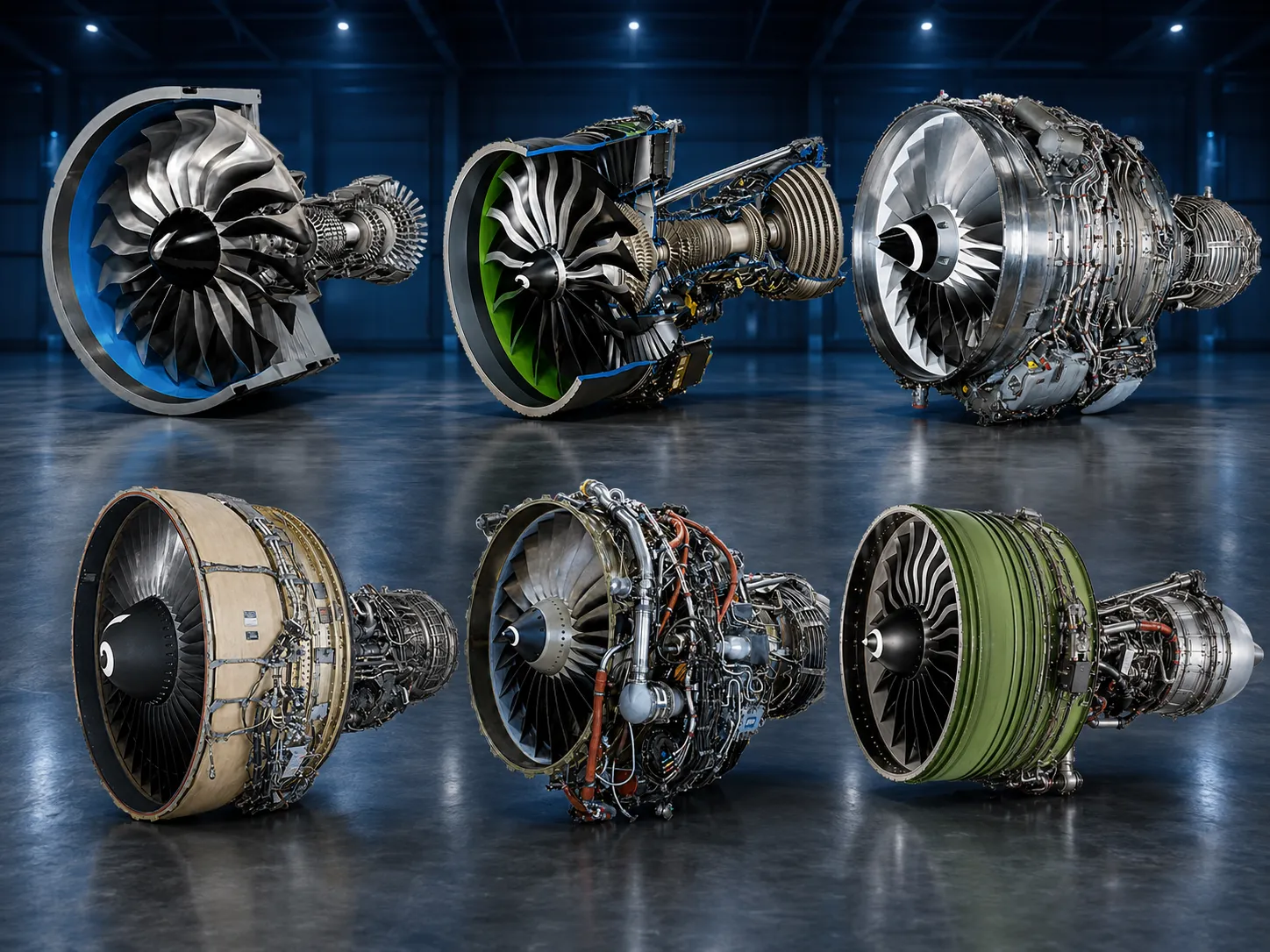
The PW4000-112 series, developed by Pratt & Whitney, represents the highest-thrust version of the PW4000 family. With a 9.3-foot fan diameter and a thrust range between 74,000 and 98,000 lbf, this engine is among the largest and most powerful commercial turbofans ever used on widebody aircraft.
Its size is striking: the fan diameter is almost comparable to the fuselage diameter of a Boeing 737. This gives a clear sense of the engineering scale required to power large aircraft, especially in long-haul operations involving high payloads and extended range.
The PW4000-112 was used on the Boeing 777-200, Boeing 777-200ER, and Boeing 777-300. It also became historically important as the first engine to receive 180-minute ETOPS certification from the start, later reaching a maximum approved duration of 207 minutes.
The PW4000-112 is a two-spool turbofan engine positioned in the 74,000 to 98,000 lbf thrust range. This places it among the large commercial engines developed for long-range twin-engine widebody aircraft.
As a high-thrust turbofan, the PW4000-112 uses a large front fan to move a large mass of air. Part of this airflow passes through the engine core, where it goes through compression, combustion, and expansion through the turbines. The remaining airflow moves through the bypass duct, contributing significantly to total thrust with greater propulsive efficiency.
In simple terms: the PW4000-112 is a large turbofan developed for classic Boeing 777 variants, combining high thrust, reliability, advanced technology, and ETOPS capability for long routes over oceans and remote areas.
| Parameter | Value |
|---|---|
| Maximum thrust | 98,000 lbf |
| Bypass ratio | 6.4:1 |
| Overall pressure ratio | 42.8:1 |
| Length | 16 ft, approximately 4.88 m |
| Fan diameter | 9.3 ft, approximately 2.83 m |
| Weight | 15,584 lb, approximately 7,071 kg |
| Entry into service | 1995 |
The PW4000-112 incorporates technologies aimed at weight reduction, thermal resistance, reliability, and easier maintenance. These characteristics are essential in engines installed on long-range twin-engine aircraft, where performance and operational availability are critical.
| Technology | Description and benefit |
|---|---|
| Hollow titanium fan blades | Hollow titanium blades combining reduced weight with high structural strength. |
| Single-crystal high-pressure turbine blades | Single-crystal structure without grain boundaries, with cooling for greater thermal resistance. |
| Powder-metal disks | Components manufactured using powder metallurgy, providing improved fatigue and temperature resistance in compressors and turbines. |
| Active low-pressure turbine clearance control | System that dynamically adjusts the clearance between blades and casing, improving efficiency. |
| Digital control unit | Precise electronic management of engine operating parameters. |
| Modular design | Configuration that supports easier maintenance, module replacement, and reduced repair time. |
| On-condition maintenance | Strategy that allows the engine to remain in operation until specific indicators show that maintenance is required. |
The PW4077 is one of the entry versions of the PW4000-112 family, used on the Boeing 777-200. This variant provides the thrust needed for the base version of the 777 while retaining the large-scale architecture of the family.
The PW4084 occupies an intermediate thrust range within the family. It was applied to the Boeing 777-200ER, the longer-range version of the 777-200, which required greater performance during takeoff and long-haul cruise operations.
The PW4090 is one of the higher-thrust variants described here. It was used on the Boeing 777-300, a stretched version of the aircraft that required greater propulsive capability than the smaller variants.
| Aircraft | Engine version | Note |
|---|---|---|
| Boeing 777-200 | PW4077 | Base version of the Boeing 777. |
| Boeing 777-200ER | PW4084 | Long-range version of the Boeing 777. |
| Boeing 777-300 | PW4090 | Stretched version of the Boeing 777. |
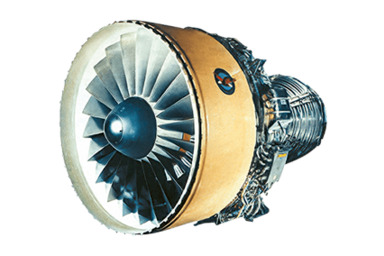
PW4000-112 engine by Pratt & Whitney. Image used for educational purposes.
MTU Aero Engines participates in the PW4000-112 program with a 12.5% program share. Its responsibility is focused on the seven-stage low-pressure turbine and the turbine exit case.
This participation is technically significant because the PW4000-112 low-pressure turbine is described as the largest ever developed by MTU. In an engine of this thrust class, the LPT must operate with high efficiency, withstand major mechanical loads, and reliably transfer energy to the low-pressure system.
| Parameter | Details |
|---|---|
| Program share | 12.5%. |
| Component under responsibility | Seven-stage low-pressure turbine and turbine exit case. |
| Work scope | Development and manufacturing. |
| Note | Largest low-pressure turbine ever developed by MTU. |
The low-pressure turbine extracts energy from the exhaust gas flow to drive the fan and the low-pressure system. In the PW4000-112, this module has seven stages, reflecting the scale and complexity of the engine.
| Aspect | Details |
|---|---|
| Stages | 7 stages. |
| Components | Blades, disks, stators, and associated structures. |
| Turbine exit case | Support structure located at the turbine outlet. |
| Work scope | Development and manufacturing of various turbine parts. |
| Relevance | Largest LPT ever developed by MTU Aero Engines. |
| Model | Application | MTU share |
|---|---|---|
| PW4077 | Boeing 777-200 | 12.5%, focused on the low-pressure turbine. |
| PW4084 | Boeing 777-200ER | 12.5%, focused on the low-pressure turbine. |
| PW4090 | Boeing 777-300 | 12.5%, focused on the low-pressure turbine. |
One of the most important points of the PW4000-112 is its ETOPS certification. The engine was the first to receive 180-minute ETOPS certification from the start, allowing twin-engine aircraft to operate long routes over oceans and remote regions.
This certification was later extended to a maximum approved duration of 207 minutes, increasing route flexibility for airlines operating aircraft equipped with this engine.
| Aspect | Details |
|---|---|
| Initial certification | 180-minute ETOPS from the start. |
| Current certification | Maximum approved duration of 207 minutes. |
| Meaning | Allows operations on routes over oceans and remote regions. |
| Benefit | Greater route flexibility for airlines. |
The PW4000-112 was developed for large widebody aircraft, especially early Boeing 777 variants. During its production period, it competed directly with alternatives such as the GE90 on certain 777 versions.
| Segment | Details |
|---|---|
| Large widebody aircraft | Boeing 777-200, Boeing 777-200ER, and Boeing 777-300. |
| Thrust | 74,000 to 98,000 lbf. |
| Competition | GE90, an alternative engine option for Boeing 777 variants. |
| Differentiator | Details |
|---|---|
| ETOPS certification | First engine with 180-minute ETOPS certification from the start. |
| Advanced technology | Hollow titanium fan blades, single-crystal blades, and powder-metal components. |
| Reliability | Proven by millions of flight hours in commercial operation. |
| Power | One of the largest and most powerful commercial engines of its generation. |
| Size | 9.3-foot fan diameter, nearly comparable to the fuselage diameter of a Boeing 737. |
| Aspect | PW4000-112 | GE90-94B |
|---|---|---|
| Thrust | Up to 98,000 lbf. | Up to 94,000 lbf. |
| Fan diameter | 9.3 ft. | 10.3 ft. |
| Application | Boeing 777-200, 777-200ER, and 777-300. | Boeing 777-200ER and 777-300. |
The PW4000-112 program was led by Pratt & Whitney, with MTU Aero Engines participating in the development and manufacturing of the low-pressure turbine. This partnership contributed to the creation of one of the largest low-pressure turbines ever developed by MTU.
| Partner | Note |
|---|---|
| Pratt & Whitney | Program leader, responsible for engine development, marketing, and integration. |
| MTU Aero Engines | 12.5% program share, with development and manufacturing of the low-pressure turbine. |
The PW4000-112 entered service in 1995 and has accumulated more than 30 years of operation. Its presence on classic Boeing 777 aircraft demonstrates the engine’s importance in the early development and operational expansion of the 777 family.
| Aspect | Details |
|---|---|
| Entry into service | 1995. |
| Time in operation | More than 30 years of service. |
| Fleet | Hundreds of engines installed on classic Boeing 777 aircraft. |
Production of the PW4000-112 has ended, especially as newer Boeing 777 variants evolved and GE90 engines became dominant on certain versions. Even so, aircraft equipped with this engine family remain in service and require technical support, spare parts, and specialized maintenance.
| Aspect | Details |
|---|---|
| Production | Ended, with replacement by newer alternatives on later 777 variants. |
| Fleet in operation | Still significant with selected airlines. |
| MRO demand | Continued support for the existing fleet. |
Because part of the classic Boeing 777 fleet is expected to remain operational for many years, demand for PW4000-112 maintenance, parts, and technical support remains relevant. ETOPS certification also preserves operational value for long routes over oceans.
The sustainability outlook for the PW4000-112 is linked to efficient maintenance of the existing fleet, safe life-extension support, and compatibility with sustainable aviation fuels, commonly known as SAF.
The PW4000-112 represents one of the most important phases in the evolution of large turbofan engines for twin-engine widebody aircraft. Its use on early Boeing 777 variants marked a relevant stage in long-haul aviation, especially because of its ETOPS certification from the start.
With technologies such as hollow titanium fan blades, single-crystal blades, powder-metal disks, active clearance control, and modular design, the engine combined power, reliability, and structured maintenance for demanding international operations.
MTU Aero Engines’ participation in the low-pressure turbine reinforces the industrial complexity of the program. The seven-stage LPT shows the technical scale required to convert gas energy into enough power to drive a large-diameter fan in an engine of this class.