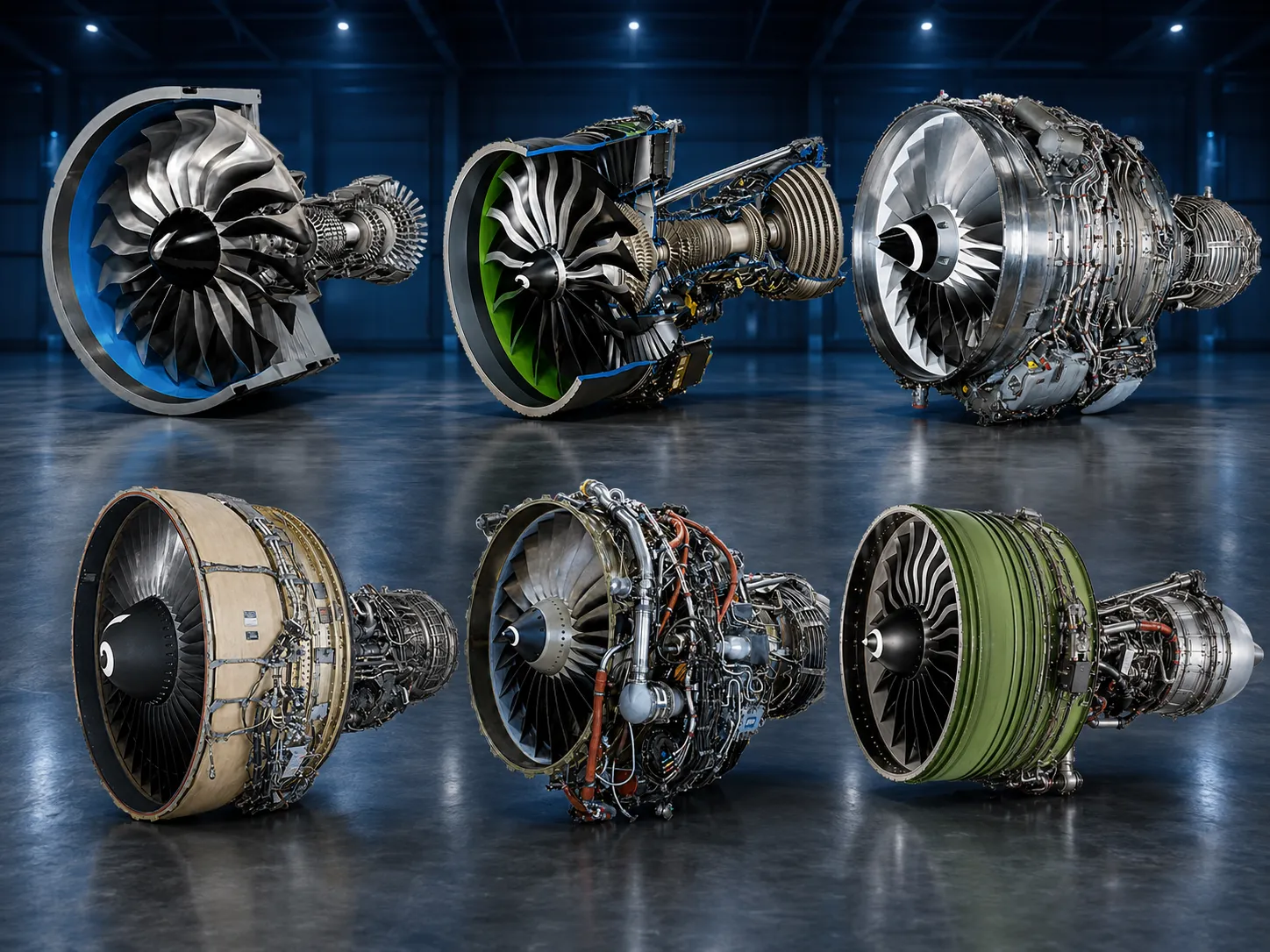
The CF6 is a two-spool turbofan engine developed by GE Aerospace for medium- and long-haul widebody aircraft. Over its long service history, it has powered multiple Airbus and Boeing platforms, as well as large military transport aircraft.
With more than 40 years of continuous production, the CF6 stands as one of the most durable and commercially successful engine programs in aviation history. Its use on aircraft such as the Boeing 747, Boeing 767, McDonnell Douglas DC-10, MD-11, Airbus A300, A310, and A330 helped establish it as a major reference in large commercial aircraft propulsion.
MTU Aero Engines entered the CF6 program in 1971 with the CF6-50. This marked MTU’s entry into the commercial aviation engine market and established a long-term strategic partnership with GE Aerospace.
The CF6 is a two-spool turbofan engine positioned in a thrust range from 41,500 to 69,800 lbf, depending on the variant. This range supports applications on commercial widebody aircraft and large military transport platforms.
As a turbofan engine, the CF6 uses a front fan to move a large mass of air. Part of this airflow enters the engine core, where it is compressed, mixed with fuel, burned, and expanded through the turbines. The remaining airflow passes around the core through the bypass duct, helping generate thrust more efficiently than a pure turbojet configuration.
In simple terms: the CF6 is a large turbofan engine designed to provide high thrust, reliability, and efficiency for widebody aircraft operating medium- and long-haul routes.
| Parameter | CF6-6 | CF6-50 | CF6-80C2 | CF6-80E |
|---|---|---|---|---|
| Maximum thrust | 41,500 lbf | 54,000 lbf | 63,500 lbf | 69,800 lbf |
| Bypass ratio | 5.9:1 | 4.4:1 | 5.3:1 | 5.1:1 |
| Overall pressure ratio | 25:1 | 30:1 | 31.8:1 | 34.8:1 |
| Length | 15.7 ft | 15.3 ft | 14.0 ft | 14.0 ft |
| Fan diameter | 8.8 ft | 8.8 ft | 8.8 ft | 9.5 ft |
| Weight | 8,995 lb | 9,050 lb | 9,860 lb | 11,225 lb |
Over several decades, the CF6 family incorporated technologies aimed at improving efficiency, reliability, maintenance, and operational control. These features helped keep the engine relevant across a wide range of commercial and military applications.
| Technology | Description and benefit |
|---|---|
| Low-pressure turbine active clearance control | A system that dynamically adjusts clearances between turbine blade tips and the casing, improving efficiency across different operating conditions. |
| Digital control unit | Electronic management of engine operating parameters to support improved performance and engine operation. |
| On-condition maintenance | A maintenance strategy that allows the engine to remain in service until specific indicators show that intervention is required. |
| Modular design | A configuration that simplifies maintenance and reduces repair time by allowing work to be performed by module. |
The CF6-6 was the first variant of the CF6 family. It entered service in 1971 and marked the beginning of the operational history of this large turbofan engine program.
The CF6-50 expanded the CF6 family’s presence across commercial widebody aircraft and marked MTU Aero Engines’ entry into the program. This variant was used on medium- and long-haul aircraft from McDonnell Douglas, Boeing, and Airbus.
The CF6-80C2 is one of the most commercially successful variants of the CF6 family. It powered several widebody commercial aircraft and also served as the basis for a military application on the C-5M Super Galaxy.
The CF6-80E is the highest-thrust variant of the CF6 family. It was developed for the Airbus A330, a widebody aircraft used on medium- and long-haul routes.
The F138 military variant is based on the CF6-80C2 and is used on the C-5M Super Galaxy, a strategic airlift aircraft operated by the United States Air Force.
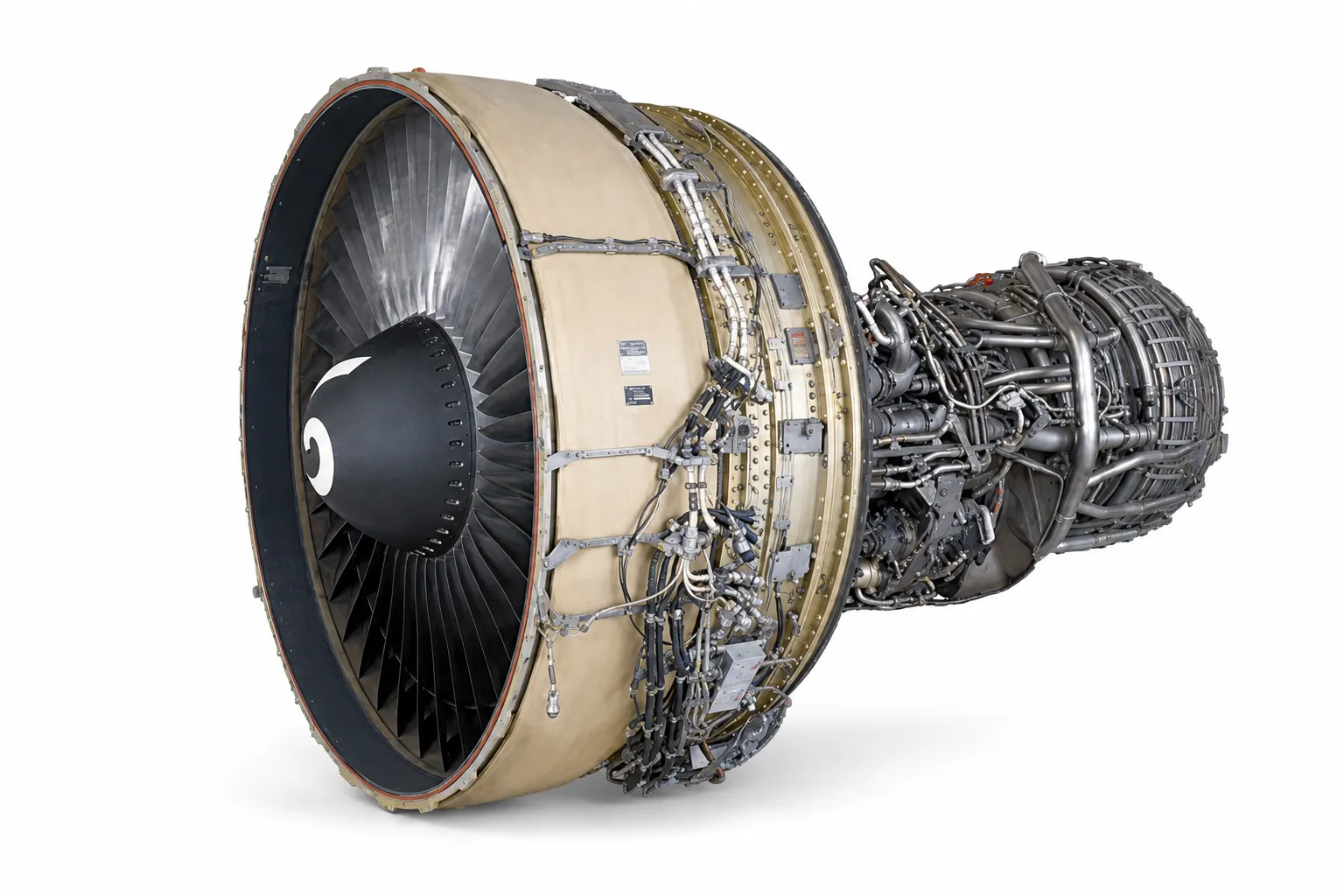
GE Aerospace CF6 engine. Image used for educational purposes.
MTU Aero Engines’ participation in the CF6 program began in 1971 with the CF6-50. This involvement is historically significant because it marked MTU’s entry into the large commercial aircraft engine market.
| Parameter | Details |
|---|---|
| Start of participation | 1971, with the CF6-50. |
| Models covered | CF6-6, CF6-80A, CF6-80C2, and CF6-80E. |
| Partnership model | Risk- and revenue-sharing partnership. |
| Parts produced | More than 1 million components. |
MTU participates in the manufacturing of components related to the low-pressure compressor, including structural and aerodynamic parts. This section performs the initial compression of the airflow before it continues into later stages of the engine.
The high-pressure compressor operates under demanding conditions of rotational speed, temperature, and pressure. Manufacturing its components requires high precision, appropriate materials, and strict quality control.
The high-pressure turbine is one of the most critical sections of the engine because it receives hot gases immediately after combustion. Its components must withstand extreme conditions while maintaining high operational reliability.
MTU’s participation in the CF6 program represents a milestone in the company’s history. Joining the program marked the beginning of MTU’s work in large commercial engines and helped establish a long-term partnership with GE Aerospace.
Support for the CF6 includes a maintenance, repair, and overhaul structure, commonly known as MRO. For the CF6-80C2, MTU Maintenance participates through facilities in Germany and Canada.
| Facility | Location | Start year | Work scope |
|---|---|---|---|
| MTU Maintenance | Hannover, Germany | 1989 | Full engine MRO. |
| MTU Maintenance | Vancouver, Canada | 1989 | Full engine MRO. |
| Metric | Value |
|---|---|
| Shop visits through 2025 | More than 2,350. |
| Capability | Complete engine overhaul, or full engine MRO. |
| Additional services | On-site maintenance activities. |
MTU provides field maintenance services to support operators and reduce aircraft downtime. This type of support can be performed close to the operation and, in some cases, may help avoid immediate engine removal for shop maintenance.
The CF6 program involves a broad industrial supply chain, with specialized companies contributing to design, manufacturing, components, and support.
| Partner | Role |
|---|---|
| GE Aerospace | Program leader and engine designer. |
| Safran Aircraft Engines | Long-time partner in GE engine programs. |
| GKN Aerospace | Supplier of structural components. |
| Avio Aero | Participant in the engine supply chain. |
The CF6 family entered service in 1971 and remained in production for more than four decades. This longevity reflects its broad application, technical maturity, and importance to commercial widebody aircraft and military platforms.
With a significant installed fleet, the maintenance and spare parts market for the CF6 remains important. Long-life engines depend on technical support, parts availability, and overhaul capability to maintain aircraft safety and availability.
The future outlook for the CF6 family is mainly tied to support for the existing fleet, continued operational availability, and solutions that can help reduce the environmental impact of operations.
The GE Aerospace CF6 is one of the most important turbofan engines in the history of large commercial aviation. Its use on different widebody and military aircraft demonstrates the versatility and robustness of the design.
MTU Aero Engines’ participation in the program, beginning in 1971, represents a historical milestone for the company and shows the importance of industrial partnerships in aircraft engine programs. Over the decades, component manufacturing, technical support, and MRO activities have helped sustain the operation of a large fleet equipped with CF6 engines.
With a long operating life, a major presence in commercial aircraft, and continued support, the CF6 remains a reference point for maturity, reliability, and historical importance in aircraft propulsion.