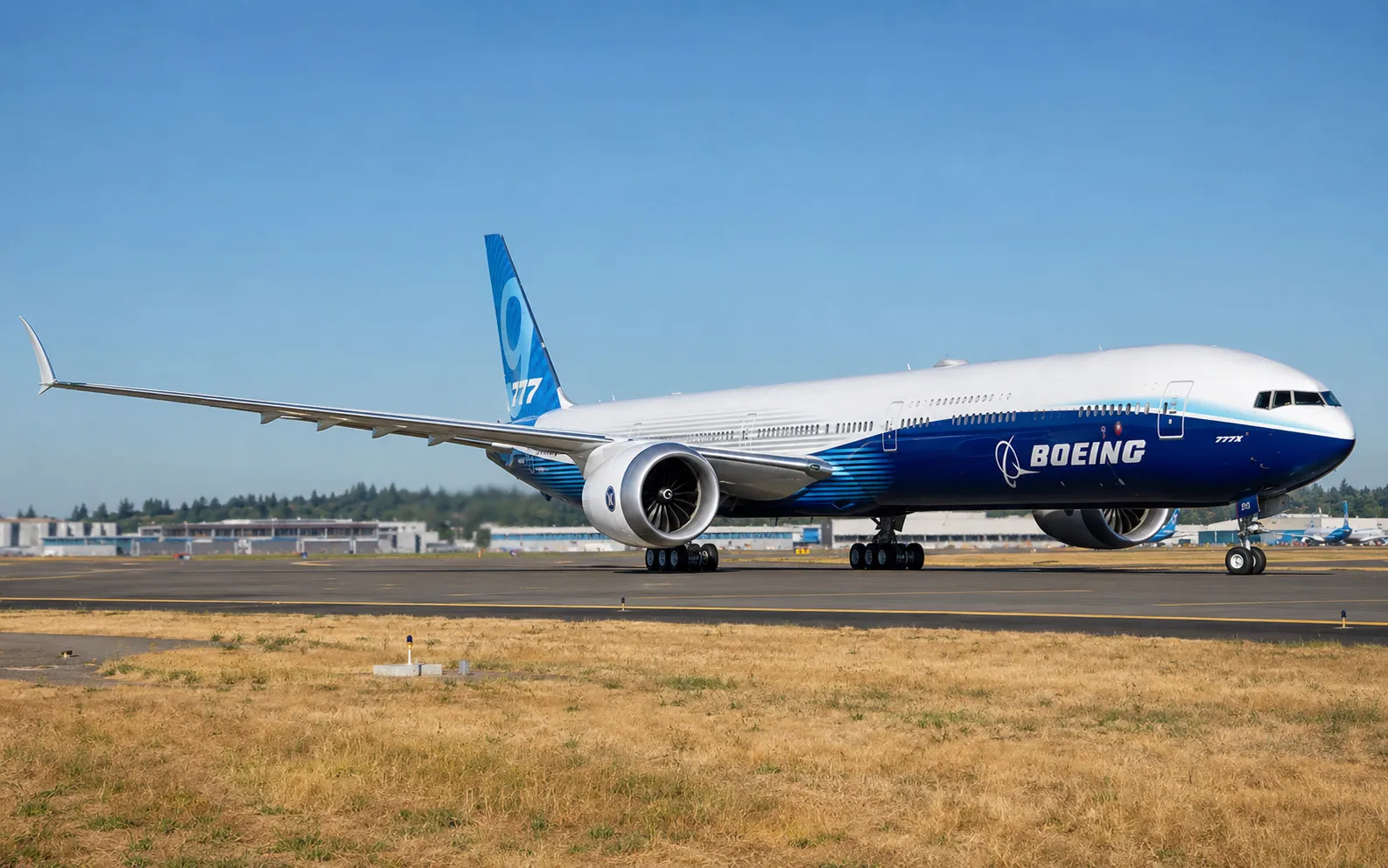
Boeing has received a key authorization from the FAA to move forward with one of the most important phases of certification testing for its new widebody aircraft, the 777X. Although this milestone comes after a long series of delays, it represents an important step for the American manufacturer in the highly competitive large-aircraft market.
In an interview with Leeham News and Analysis on June 6, Stephanie Pope, CEO of Boeing Commercial Airplanes, confirmed that the U.S. Federal Aviation Administration, or FAA, had cleared Boeing to begin Phase 4B of the Type Inspection Authorization, known as TIA.
This stage is considered one of the most relevant parts of the Boeing 777-9 certification process because it includes a significant portion of the remaining testing related to the aircraft’s complex systems.
To understand the importance of this moment, it is important to remember that, after the 737 MAX accidents, the FAA adopted a much stricter approach to Boeing certification programs. In the case of the 777X, instead of treating the Type Inspection Authorization as a single step, the U.S. regulator divided the process into phases.
Phase 4B is one of the final stages that still requires a substantial amount of testing. According to Stephanie Pope, this authorization unlocks most of the remaining FAA flight testing that Boeing can now carry out.
In practical terms, this means Boeing can move forward with critical tests involving some of the most important systems on the 777X, especially those related to avionics, stability, control, and crew interaction with the aircraft.
Some of the main areas evaluated during this phase include:
For Boeing, this is a major milestone within the program. Although other phases of the process are nearly complete, Phase 4B focuses on a large portion of the testing related to the aircraft’s most complex systems.
Despite this progress, full certification of the 777X is not immediate. Boeing still expects to obtain type certification next year, several years later than the original timeline for the aircraft’s first deliveries.
The fleet of four test aircraft has already accumulated thousands of flight hours, but the program has faced significant setbacks. One of the most notable was a pause that began in August 2024 after fatigue cracks were found in engine support components known as thrust links.
Boeing says the affected parts were redesigned and replaced, allowing the flight test campaign to resume.
Even so, the FAA is still expected to require hundreds of additional test points before issuing the final certificate. The major question now is how much longer this campaign will take before the 777X is finally cleared to enter commercial service.
Certification of the 777X is a key part of Boeing’s strategy to strengthen its position in the twin-engine widebody aircraft segment. This is a highly competitive market, where the Airbus A350-1000 has established itself as one of the main rivals.
The 777X was designed to offer high capacity, long range, and improved operating efficiency. The 777-9 version can carry around 426 passengers in a typical two-class configuration and includes one of the program’s most distinctive features: folding wingtips.
This feature allows the aircraft to have a larger wingspan in flight, improving aerodynamic efficiency, while folding the wingtips on the ground so the aircraft can operate at airports designed for existing large widebody aircraft.
The potential of the 777X is significant. However, its commercial success will depend not only on its technology, but also on Boeing’s ability to deliver a reliable aircraft, certified under strict oversight and capable of meeting its promised performance and operating-cost targets.
More than just a new airplane, the 777X is an important test for Boeing itself. The program must show that the manufacturer can continue innovating, rebuild confidence, and meet regulatory requirements in a much more demanding certification environment.