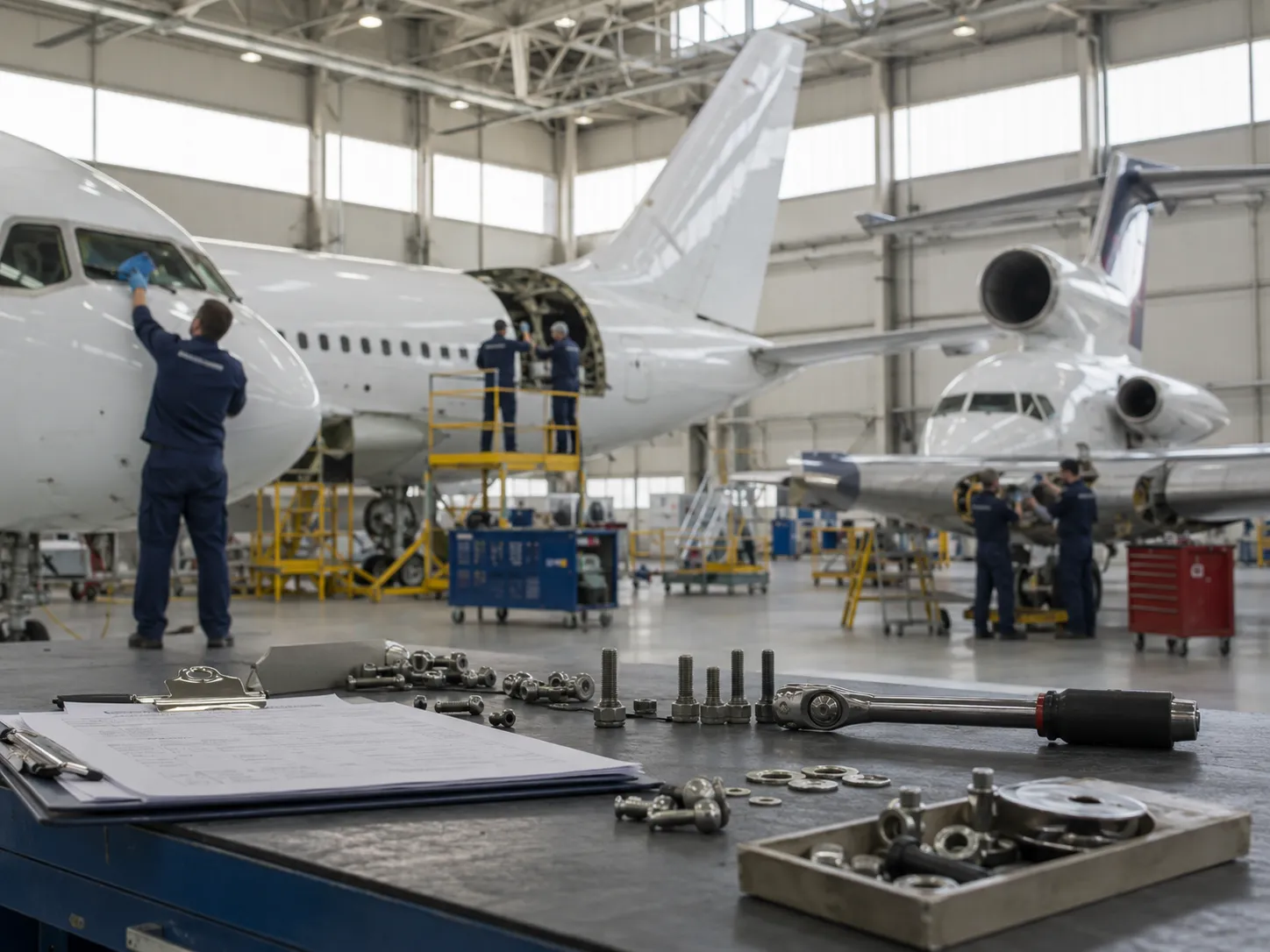
In aviation, aircraft safety does not begin only in the cockpit. It begins long before takeoff: in the hangar, during inspections, in the correct selection of parts, in strict compliance with maintenance manuals, and in the responsibility behind every maintenance procedure.
An aircraft may look ready to fly. It may be clean, fueled, boarded, and released for service. But if a maintenance-related failure remains hidden somewhere in its structure or systems, that failure may only appear at the worst possible moment: during takeoff, climb, or cruise flight.
Three historical cases show this very clearly: American Airlines Flight 191, British Airways Flight 5390, and Japan Air Lines Flight 123. They involved different aircraft, different circumstances, and different outcomes, but they all had something in common: the origin of the problem was connected to maintenance work that was not performed correctly.
American Airlines Flight 191 involved a McDonnell Douglas DC-10. The accident happened in 1979, shortly after takeoff from Chicago.
The key issue in this case was an improper maintenance procedure involving the engine and pylon assembly. The pylon is the structure that attaches the engine to the wing. Instead of following the manufacturer’s recommended method, an alternative procedure was used to remove the engine and pylon together.
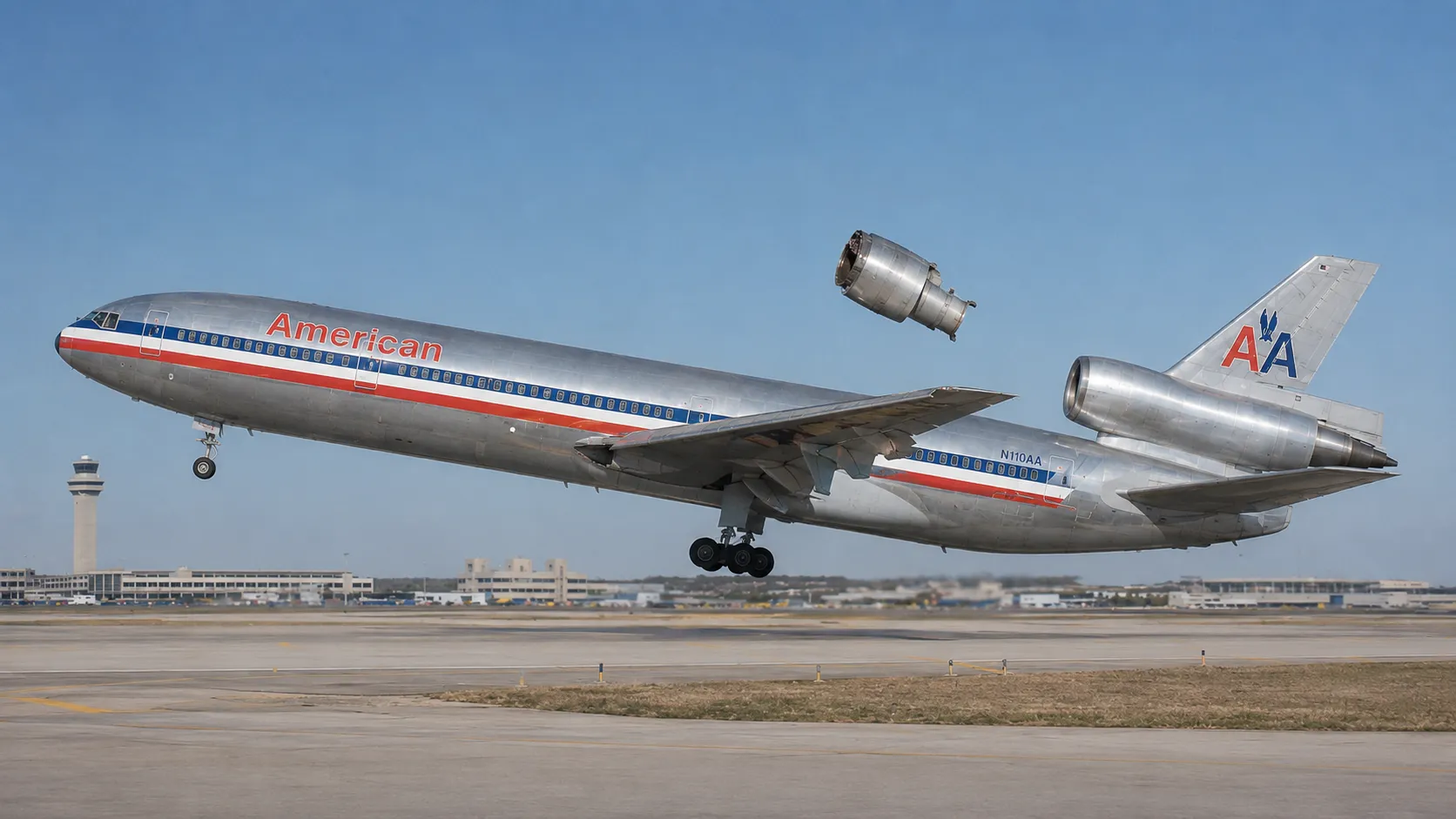
The goal was to save time, but the procedure caused structural damage in a critical attachment area. The damage remained hidden. The aircraft returned to service and appeared to be normal.
During takeoff, however, the damaged structure could not withstand the loads. The left engine separated from the wing, triggering a chain of failures that led to loss of control.
This case highlights one of the most important lessons in aircraft maintenance: a faster or improvised procedure can create an invisible risk. In aviation, the manual is not a suggestion. It exists to control loads, alignment, tolerances, and risks that may not be visible during the work itself.
British Airways Flight 5390 occurred in 1990 during a flight from Birmingham, in the United Kingdom, to Málaga, Spain.
Before the flight, the left cockpit windshield had been replaced. The problem was in the bolts used during the installation. Most of them were smaller than the required specification for that windshield attachment.
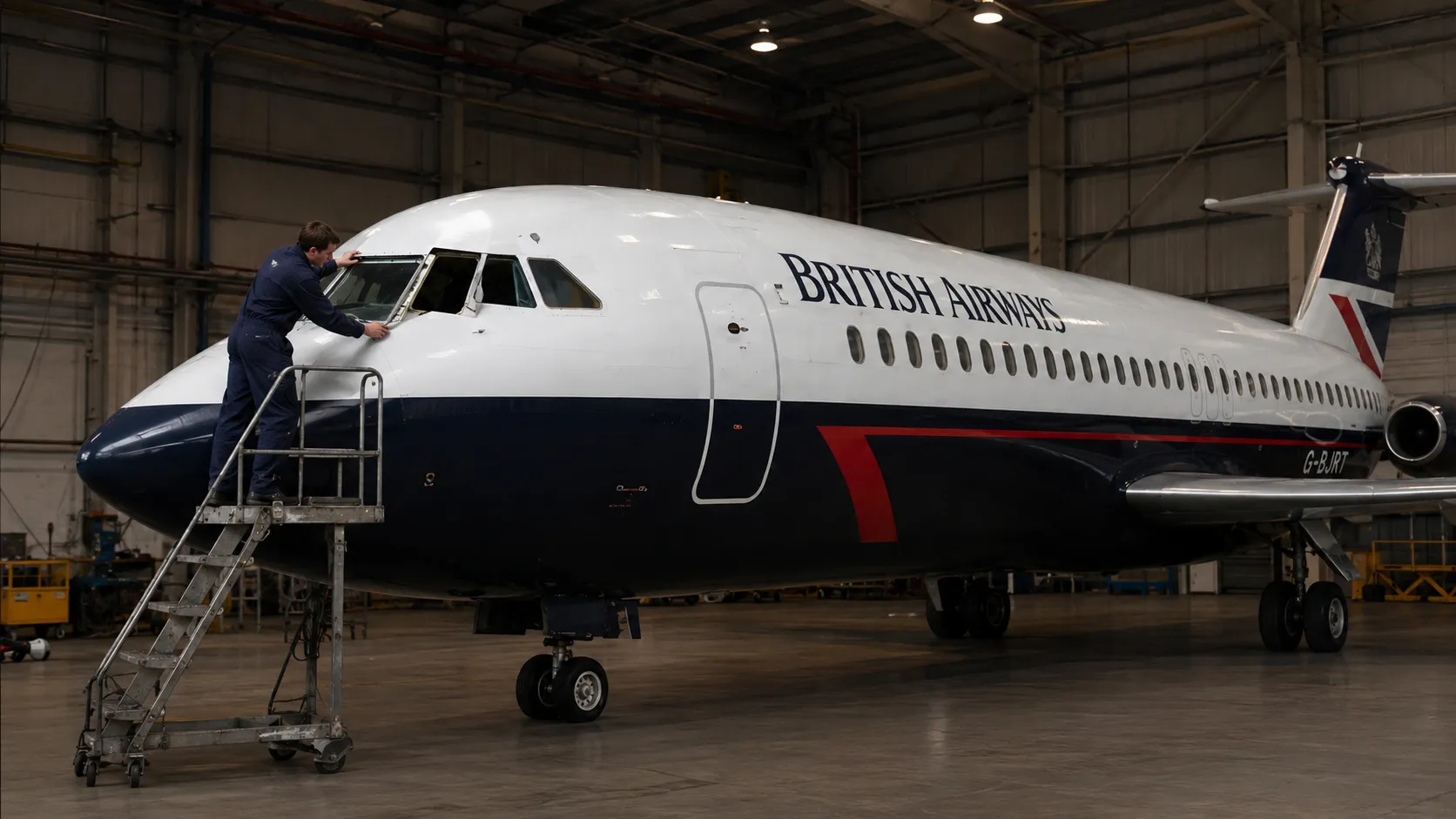
Visually, the bolts may have looked similar. But in a pressurized aircraft, even a small difference can be critical.
During climb, the windshield separated from the aircraft, causing an explosive decompression. The captain was partially pulled out of the cockpit while the crew struggled to control the situation. Fortunately, the first officer was able to land the aircraft safely.
This case reinforces an essential maintenance lesson: visual appearance does not replace technical verification. In aircraft maintenance, the correct part means the correct part number, correct dimensions, correct specification, and installation according to approved documentation.
Japan Air Lines Flight 123 remains one of the deadliest accidents in aviation history. The aircraft was a Boeing 747, and the accident occurred in Japan in 1985.
The origin of the failure was a structural repair performed years earlier after a tailstrike, when the tail of the aircraft struck the runway. The repair to the rear pressure bulkhead was not carried out correctly.
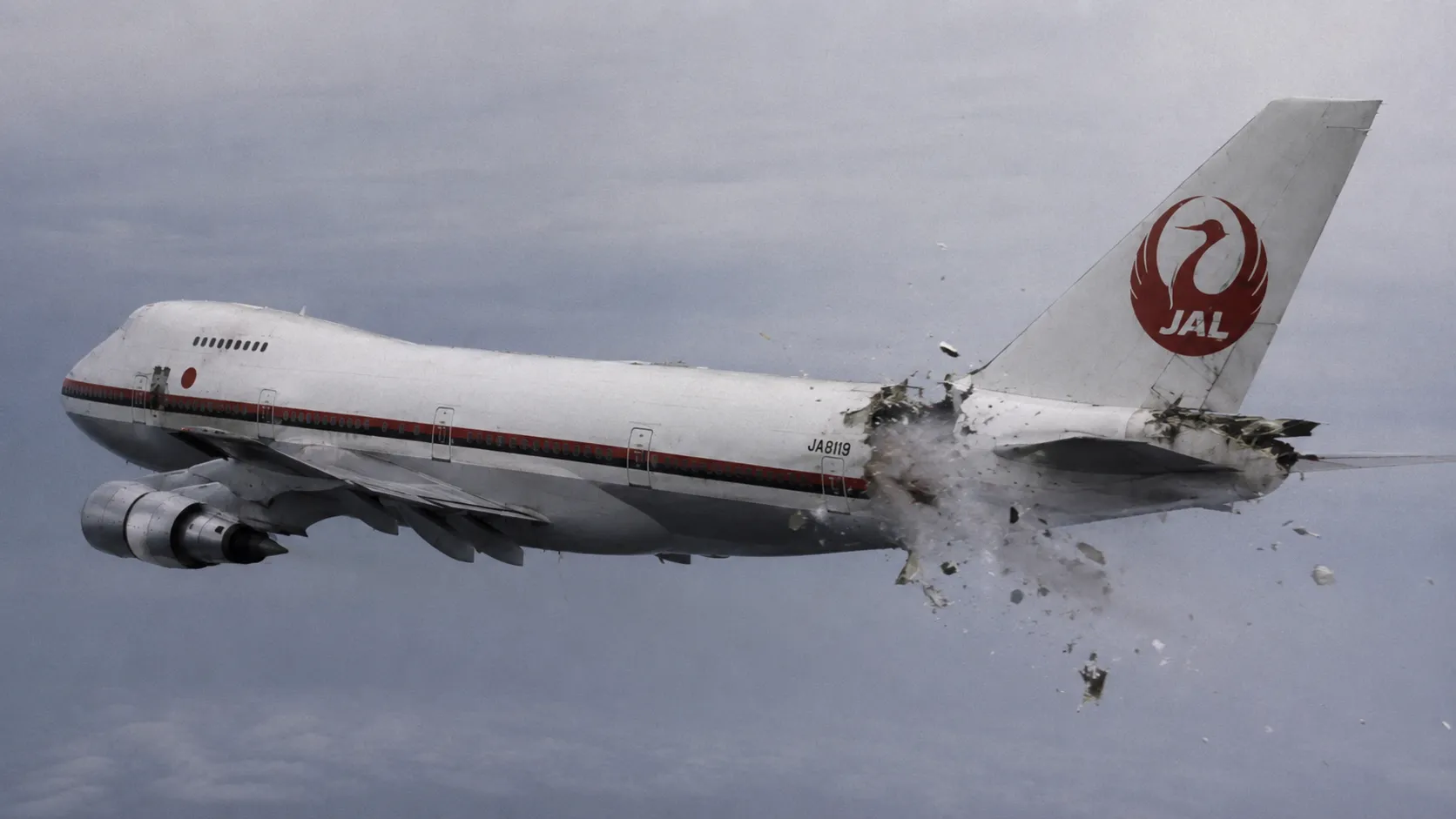
For a period of time, the aircraft continued flying. But with every pressurization and depressurization cycle, fatigue continued to grow in the weakened structure. The problem remained hidden until the bulkhead failed in flight.
The rupture caused an explosive decompression, damaged the rear section of the aircraft, and compromised critical flight control systems.
This case shows that a maintenance failure may not appear immediately. It can remain silent for years, growing with each flight cycle, until it becomes catastrophic.
These three cases should not be seen only as stories of error. They are technical reminders of how important maintenance culture is to aviation safety.
In aviation, every step exists for a reason. The selection of a bolt, the sequence used to remove an engine, the inspection of a structural repair, and the release of an aircraft back to service are all part of the safety chain.
When that chain fails, the problem may not appear in the hangar. It may only appear later, with passengers on board, during a critical phase of flight.
That is why aircraft maintenance requires discipline, documentation, training, traceability, supervision, and absolute respect for approved procedures.
An aircraft mechanic does not work only with tools. An aircraft mechanic works directly with flight safety.
American Airlines Flight 191, British Airways Flight 5390, and Japan Air Lines Flight 123 show that major accidents can begin with small deviations: an improvised procedure, a part that only looks correct, or a structural repair that was not performed properly.
In aviation, no detail is small when that detail is part of aircraft safety.
The main lesson is clear: safety begins before takeoff. It begins in the hangar.
To better understand these three cases, their causes, and the lessons they left for aircraft maintenance and aviation safety, watch the full video.
WATCH THE FULL VIDEO